Resurrection Men: The Basement Data Archaeologists Digging Up What the Digital World Buried
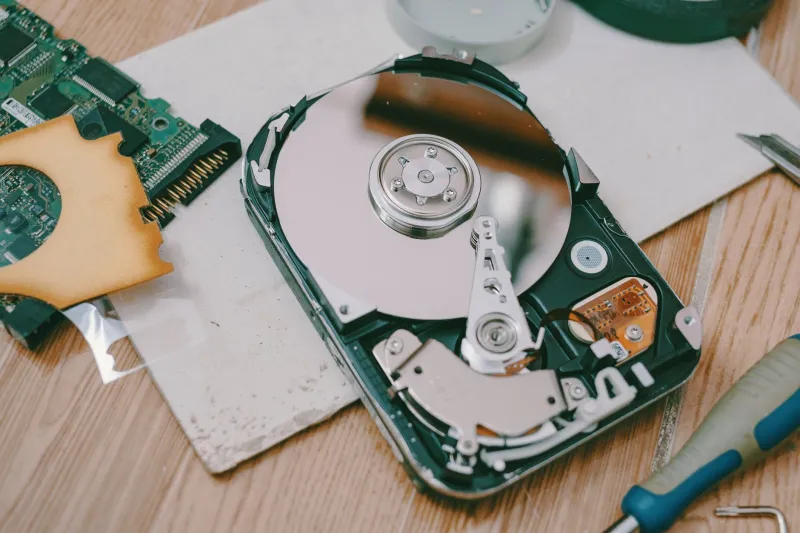
Somewhere in a converted garage in Tucson, a guy named Marcus is coaxing a decade-old hard drive back to life with tools that look like they belong in a hospital operating theater. He's not doing it for money — or at least not primarily. He's doing it because somewhere on that spinning magnetic platter is someone's entire past, and he's the last person standing between it and nothing.
This is the world of underground data archaeology. It doesn't have a catchy name, doesn't have a trade association, and you won't find it trending on any platform. But it exists, quietly and stubbornly, in basements and spare bedrooms and rented lab spaces from Portland to Pittsburgh — a loose network of obsessive technicians who've turned the recovery of corrupted storage media into something that feels less like a service and more like a calling.
The Machines That Remember Everything (Until They Don't)
Here's the part nobody tells you when you buy a laptop: hard drives are physical objects, and physical objects fail. The magnetic platters that store your photos, your half-finished novel, your kid's first birthday video — they spin thousands of times per minute, balanced on tolerances measured in nanometers. A power surge, a dropped laptop, a firmware glitch, a head crash — any of it can turn years of accumulated digital life into an unreadable block of noise.
Cloud storage was supposed to fix this. And for a lot of people, it did. But there's an enormous archive of personal history sitting on drives manufactured before iCloud was a thing, before Google Photos existed, before anyone thought seriously about backup culture. Drives from the early 2000s through the mid-2010s, sitting in closets and storage units across the country, holding memories nobody thought to migrate before the hardware quietly started dying.
That's where the resurrection men come in.
Soldering in the Dark
The community is hard to map, partly by design. Most practitioners operate through word of mouth, private Discord servers, and a handful of niche forums that haven't been indexed by anything mainstream in years. They range from self-taught tinkerers who got obsessed after recovering their own dead drive to former IT professionals who burned out on corporate work and redirected their skills toward something that felt more meaningful.
The technical side is genuinely brutal. Recovering a mechanically failed hard drive — one where the read/write head has physically crashed into the platter surface — requires opening the drive in a near-dust-free environment, transplanting components from donor drives, and coaxing the firmware into behaving long enough to image what's left of the data. Flash memory recovery from a corrupted SD card or USB drive means working at the chip level, sometimes literally desoldering NAND chips and reading them directly. These aren't skills you pick up from a YouTube tutorial.
"Most people don't understand that data recovery and IT support are basically different professions," says one practitioner who goes by the handle Ferrox online and works out of a home lab in suburban Ohio. "Your local Geek Squad guy is not equipped for this. The equipment alone — a professional-grade PC-3000 system, a clean bench setup, donor drive libraries — we're talking tens of thousands of dollars minimum. The barrier to entry is insane."
Which is exactly why the underground scene exists. Commercial data recovery firms charge anywhere from $300 to several thousand dollars per job, pricing out anyone without deep pockets. The informal network operates on sliding scales, community favors, and a general philosophy that the work matters more than the invoice.
What's Actually on These Drives
Ask anyone in this community what keeps them going, and the answer almost never involves the technical challenge alone. It's what they find.
A woman in her sixties whose external drive failed three years after her husband passed, taking with it every photo from their last decade together. A musician whose only recordings of a disbanded project — four years of original material, never released, never backed up — were sitting on a water-damaged MacBook. A family whose home video archive from the 1990s and early 2000s had been digitized onto a drive that then failed before anything was ever burned to disc.
These aren't edge cases. They're the norm. And each successful recovery carries a weight that practitioners describe in almost identical terms: relief, yes, but also something stranger. The sensation of pulling something real and irreplaceable back from a kind of oblivion.
"I recovered a drive for a guy last year that had his dad's digital photography archive on it," Ferrox says. "His dad had passed, and this was basically the only record of a decade of his creative work. When I told him I'd gotten about 90% of it back, he just went quiet on the phone for a long time. That's the job. That's what it actually is."
The Ethics of the Excavation
There's a layer of complexity here that doesn't come up in most technical hobbies. Data recovery means intimate access. Personal correspondence, financial records, private photos — when you're working on someone's failed drive, you're holding their life in your hands in a way that's genuinely uncomfortable to think about.
The underground community takes this seriously, maybe more seriously than some commercial operations. Practitioners talk about strict non-disclosure practices, working from forensic images rather than original media wherever possible, and a general ethic of discretion that's enforced socially rather than legally. Nobody in this scene wants to be the person who leaked something. The reputation damage would be permanent.
There's also the question of what happens when recovery surfaces something unexpected — evidence of something illegal, or deeply private material the client may not have remembered was there. These conversations happen in the forums, without easy resolution. The community hasn't landed on universal answers, and probably never will.
A Refusal to Let Things Disappear
What ties the data archaeology underground together, beyond the technical obsession, is a shared resistance to the logic of obsolescence. The mainstream digital world runs on a kind of enforced amnesia — old platforms shut down, file formats go unsupported, hardware gets abandoned, and the implicit message is always just upgrade, just move on, just start over.
The people coaxing dead drives back to life in their garages and spare bedrooms are pushing back against that. Not loudly, not with a manifesto, just with soldering irons and donor libraries and an absolute refusal to accept that because something is technically lost, it's actually gone.
There's a SubStrata logic to all of it — the insistence that what exists beneath the surface of the official record is worth fighting for, even when the fight is quiet and unglamorous and conducted in a converted garage in Tucson at two in the morning.
Marcus got the drive spinning again, by the way. About 80% recovered. Enough.