Static and Secrets: Inside the Underground World of Shortwave Listeners Chasing Signals That Don't Officially Exist
Somewhere between 3 and 30 megahertz, a loose network of American hobbyists is pressing headphones to their ears and writing down things they're not supposed to hear. They call themselves SWLs — shortwave listeners — and what they're cataloging is a shadow world of encrypted bursts, unacknowledged military traffic, and transmissions that official sources flatly deny. They're not spies. They're not conspiracy theorists (mostly). They're just people who figured out that the electromagnetic spectrum is leaking, and they've got the notebooks to prove it.
The Band Nobody's Supposed to Be Listening To
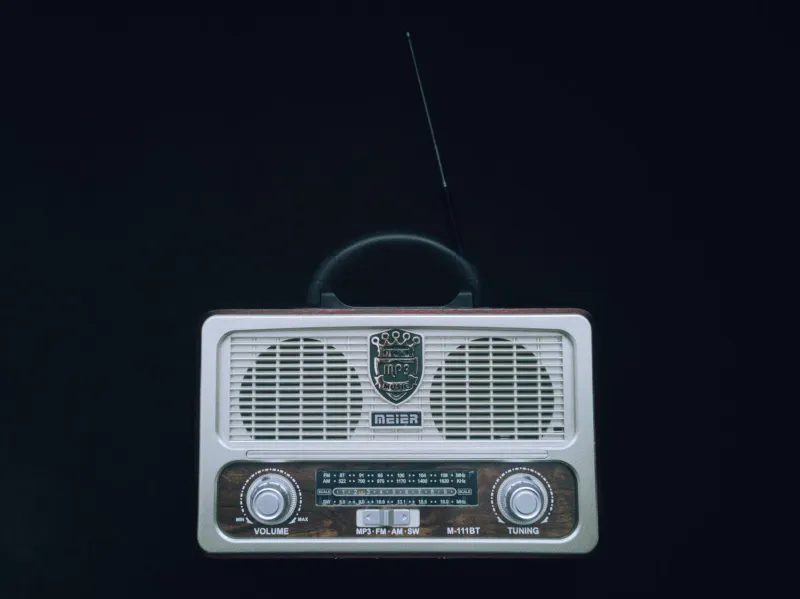
Most Americans think of radio as something that plays top-40 hits between car insurance ads. Shortwave is something else entirely. It's a frequency range that bounces off the ionosphere, capable of traveling thousands of miles without a single cell tower or satellite involved. During the Cold War, governments used it constantly — for propaganda, for espionage, for coordinating assets in the field. The Soviet Union went dark. The Iron Curtain fell. And most people assumed shortwave went quiet.
It didn't.
Tune a receiver across those frequencies today and you'll still find a remarkable amount of traffic. Some of it is legitimate and identifiable: Christian broadcasters out of Texas, ham operators running nets, Radio Havana if you catch the right skip. But scattered throughout — especially in the upper bands, especially late at night — there are things that don't resolve cleanly into any known category. Monotone voices reading strings of numbers. Digital bursts that last four seconds and disappear. Repeating tones in sequences that follow no commercial broadcast logic. The listeners who track these signals have a name for the practice: utility monitoring. And the community built around it is considerably stranger and more dedicated than you'd expect.
Log Everything, Trust Nothing
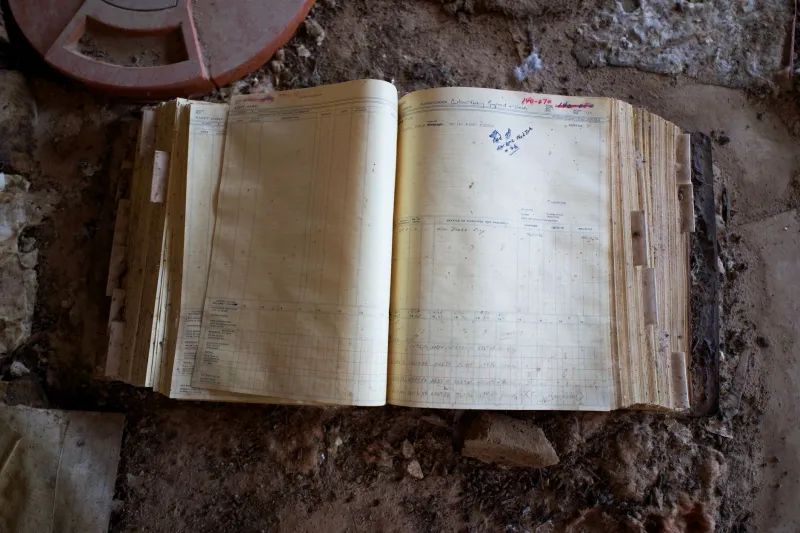
Walk into the online spaces where serious shortwave listeners congregate — the forums, the Discord servers, the mailing lists that have been running since the dial-up era — and the first thing you notice is the obsessive documentation culture. These people log everything. Frequency, time in UTC, signal strength, mode of transmission, duration, any identifiable content. A dedicated SWL might maintain years of logs, cross-referenced and searchable, building a personal database of the electromagnetic fringe.
The reasoning is practical: anomalies only become meaningful when you can demonstrate they're repeating. A weird signal heard once is noise. The same signal appearing on the same frequency every Tuesday at 0200 UTC is a pattern. And patterns, in this community, are currency.
Number stations are the most famous example — shortwave transmissions that broadcast strings of spoken digits or letters, widely understood to be one-way communications for intelligence operatives in the field. The US government has never officially acknowledged operating them. Several, including stations historically associated with American intelligence activity, continue broadcasting to this day. Listeners track them with the dedication of birdwatchers, posting frequency updates and audio recordings to shared repositories that function like underground field guides.
Building the Receiver Network
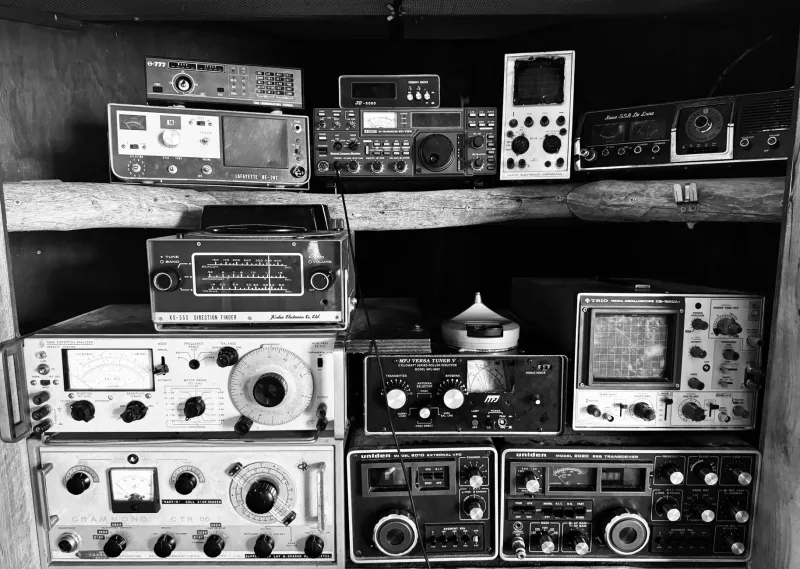
What makes the modern SWL scene genuinely different from its Cold War predecessor is the technology. Software-defined radio — SDR — has collapsed the cost of entry. A decent SDR dongle runs about thirty bucks and plugs into a laptop via USB. Combined with free software and a simple wire antenna strung across a garage, a newcomer can access a swath of spectrum that would have required thousands of dollars in hardware twenty years ago.
This democratization has produced something interesting: distributed monitoring networks. Because shortwave propagation varies by geography and atmospheric conditions, a signal audible in Phoenix might be inaudible in Pittsburgh on the same night. Listeners coordinate in real time, sharing reception reports and pointing each other toward active frequencies. Platforms like WebSDR let users remotely access receivers located across the country, meaning someone in Ohio can listen through an antenna in Oregon without leaving their couch.
The result is a kind of informal surveillance apparatus, crowd-sourced and entirely amateur, covering frequency ranges that no single listener could monitor alone.
What They Think They're Hearing
Here's where it gets genuinely complicated. The shortwave community contains multitudes, and not everyone agrees on what the signals mean — or even what they are.
There's a pragmatic faction that treats utility monitoring like a technical puzzle. These folks are interested in identifying modulation types, decoding digital signals, and matching unknown transmissions to known emitters. For them, a mysterious signal is a problem to be solved, not a mystery to be savored. They've built sophisticated decoding software and maintain open-source databases of signal signatures.
Then there's a more interpretive faction, less interested in technical identification and more focused on the implications of what they're hearing. This is where things get murkier. Signals that resist identification become evidence of classified programs. Transmissions on frequencies allocated to inactive services become proof that those services aren't actually inactive. The community polices itself imperfectly — there's genuine skepticism of wild claims, but also a baseline assumption that governments are doing things on shortwave that they'd prefer the public not know about. Given the documented history of signals intelligence, that assumption isn't entirely unreasonable.
What almost everyone agrees on: the official picture of who uses shortwave and for what is incomplete at best.
The Silence That Speaks
One of the more quietly unsettling aspects of shortwave monitoring is what happens when you try to get answers through official channels. FOIA requests about specific frequencies tend to return heavily redacted documents or outright denials. Federal agencies that regulate spectrum use — the FCC, NTIA — maintain databases of frequency allocations, but those databases have gaps, and the gaps don't always correspond to silence on the air.
Listeners have documented frequencies that appear unallocated on paper but carry regular, clearly intentional traffic. They've recorded transmissions on bands technically reserved for amateur use that bear no resemblance to ham radio operations. They've noted signals that appear, run for weeks, and vanish without any public explanation. None of this is conclusive. All of it is logged.
The community's relationship with ambiguity is, in its own way, kind of beautiful. These are people who've accepted that they're probably never going to get a straight answer, and they've built an entire practice around documenting the question. The logs accumulate. The forums stay active. Somewhere tonight, in a basement in the midwest or a spare bedroom in the Pacific Northwest, someone is spinning a dial through frequencies the official record says are empty, headphones on, pencil ready, listening to the static that isn't quite static.
The signals are there. What they mean is another matter entirely.