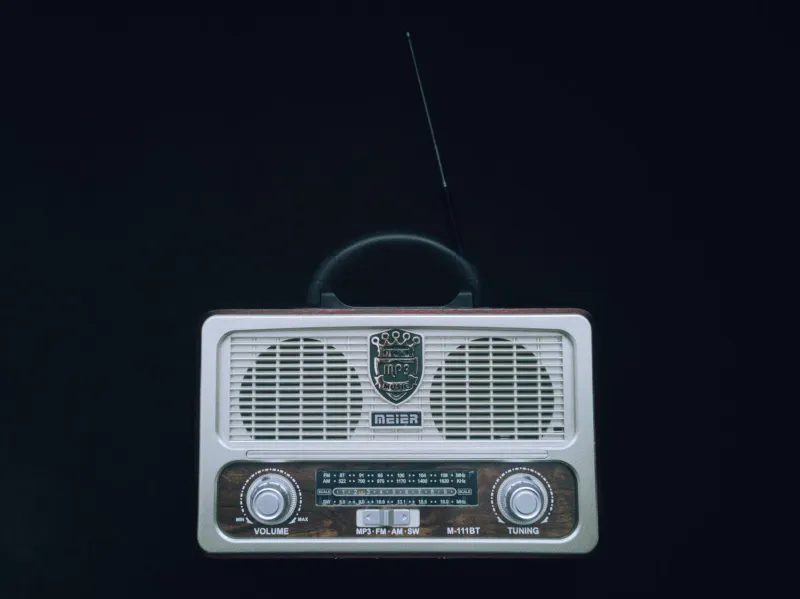
Dead Air Doesn't Mean Empty: The Radio Nerds Listening In on Transmissions Nobody's Supposed to Hear
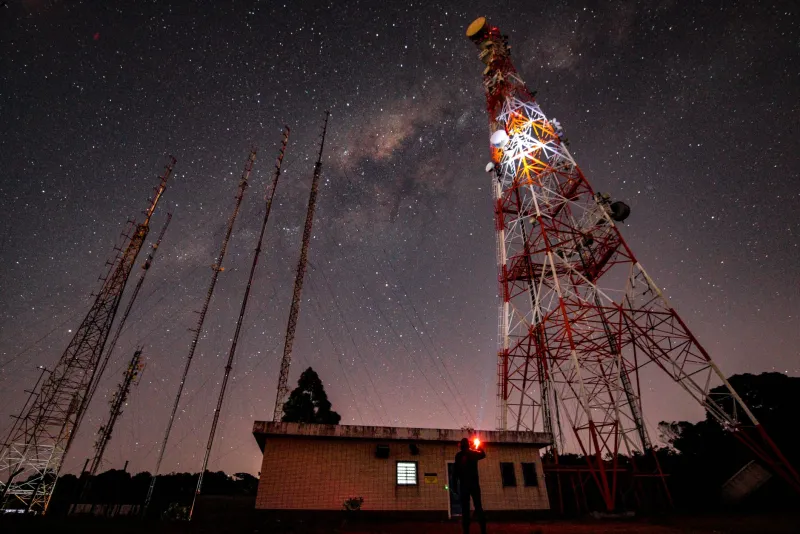
Somewhere in a suburb outside Columbus, Ohio, a guy who goes by "Ferrite" online is sitting in a converted garage at two in the morning, headphones on, a cup of cold coffee sweating onto a spiral notebook. His antenna setup — a wire strung between two trees and a modified receiver he built from salvaged parts — is pulling in something. He's not sure what, exactly. But he's writing it down.
This is the unglamorous reality of a hobby that's quietly gotten a lot more complicated in the last few years.
The Basics Nobody Talks About
Most people know shortwave radio as the thing their grandparents used to pick up foreign broadcasts. What fewer people know is that the electromagnetic spectrum is still absolutely packed with traffic that isn't meant for public consumption — and that a growing number of hobbyists have gotten very, very good at finding it.
These aren't your casual weekend scanner enthusiasts. The people operating at the edges of this scene have invested serious time and money into software-defined radio setups, custom antenna arrays, and signal analysis tools that would look at home in a signals intelligence classroom. They run open-source decoding software. They cross-reference frequency logs going back decades. And increasingly, they're stumbling onto things that raise uncomfortable questions.
"There's a difference between hearing something and understanding what you heard," one hobbyist — posting under the handle "Oblique_Carrier" on a forum SubStrata was granted limited access to — wrote in a thread from earlier this year. "Most people stop at the first part. We don't."
What They're Actually Hearing
The community is deliberately vague about specifics, and for obvious reasons. But the broad strokes are documented enough to sketch out. Certain frequency ranges, particularly in bands that are technically allocated to non-civilian use, occasionally carry traffic that doesn't match the expected technical signatures of modern encrypted military communication. Older modulation schemes. Irregular burst patterns. Traffic that appears on frequencies that aren't supposed to be active.
Some of it is mundane — legacy equipment still in use, training exercises, bureaucratic inertia keeping old systems online. But some of it is harder to explain, and that's where the community's internal debates get interesting.
There's an active split between what members call "documenters" and "interpreters." Documenters log what they hear, timestamp it, archive the raw recordings, and leave analysis to others. Interpreters go further, attempting to identify transmission sources, correlate signals with known military activity timelines, and in some cases flag what they believe are authentication failures — moments where encrypted traffic appears to contain exploitable structural weaknesses.
That last part is where things get genuinely complicated.
The Gray Zone Nobody Wants to Define
Listening to radio transmissions — even ones you're not supposed to hear — occupies a peculiar legal space in the United States. The Electronic Communications Privacy Act and related statutes make it illegal to disclose the contents of certain intercepted communications, but the act of passive listening sits in murkier territory, particularly for signals that weren't effectively encrypted or that bleed into accessible spectrum.
The community is acutely aware of this. Forum rules in the spaces SubStrata observed are explicit: no posting of decoded content, no sharing of anything that could constitute a disclosure of operational information, no identifying specific units or personnel. The emphasis is on the technical anomaly itself — the fact that something is detectable, not what it says.
"We're not trying to be spies," said one member who agreed to speak over encrypted messaging and asked to be identified only as a licensed amateur operator based in the Pacific Northwest. "What we're interested in is the infrastructure. The gaps. The places where the assumption of security doesn't match the reality of the signal."
Whether that distinction holds up legally is something nobody in the community seems eager to test.
Why Mainstream Media Won't Touch It
This is a scene that has produced some genuinely documented findings — anomalies that have been logged, cross-referenced, and in at least a few cases, quietly disappeared from the frequencies where they appeared after being noted in community forums. And yet it receives essentially zero coverage in mainstream technology or national security journalism.
The reasons aren't hard to figure out. Any outlet covering this in detail runs the risk of sourcing from people who may themselves be operating in legal gray zones. The subject matter touches national security in ways that make editors nervous. And frankly, the community's own opacity — the encrypted forums, the rotating handles, the deliberate vagueness — makes traditional verification difficult.
There's also the simpler issue that it's a genuinely technical subject with a steep learning curve, and the audience for a 2,000-word piece on SDR receiver architectures and burst transmission anomalies is not exactly mass market.
So it stays underground. Which, if you spend any time in these spaces, feels almost intentional — like the community has collectively decided that obscurity is a form of protection.
The People Doing It
The demographics skew older than you might expect. A lot of licensed amateur radio operators, retired engineers, people who came up in the era when understanding your radio meant understanding electronics. But there's a younger cohort too, drawn in through the software-defined radio hobbyist community, which has exploded in the last decade as cheap USB-based receiver dongles made entry-level signal monitoring accessible for under thirty bucks.
What unites them is a particular disposition toward institutional skepticism — not paranoia exactly, but a refusal to take the official account of what's on the spectrum at face value. They've been burned before. Frequencies declared inactive that turned out to be very active. Encryption standards declared robust that turned out to be anything but.
"Trust but verify" is a phrase that comes up a lot. Except in this community, the verification is the whole point.
What Happens Next
Nobody in this scene seems to have a clear answer for what success looks like. There's no publication pipeline, no coordinated disclosure process, no relationship with security researchers who could take documented anomalies and do something formal with them. It's a community that has built sophisticated tools for finding things and a much less developed infrastructure for deciding what to do with what they find.
Ferrite, back in his Columbus garage, doesn't seem particularly troubled by that ambiguity. He's been doing this for eleven years. He's filled seventeen notebooks.
"I'm not trying to expose anything," he said, in a brief message exchange. "I just want to know what's actually out there. Most people never ask that question. I can't stop asking it."
The spectrum doesn't care either way. It just keeps transmitting.