Quarter Drops in the Dark: The Night Shift Saving America's Dead Arcade Machines
The mall in Dayton closed its arcade in 2009. The machines stayed for another decade.
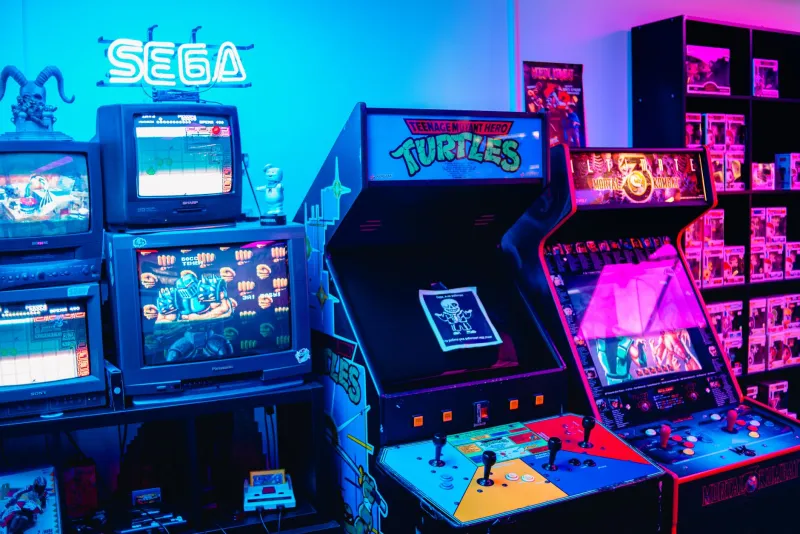
They sat in a back hallway behind a shuttered Orange Julius, cabinets stacked like dominos, marquee lights long dead, coin doors swollen with rust. When a crew of collectors finally got access — through a liquidator who just wanted the space cleared — they found a Ms. Pac-Man cabinet with a burned logic board, a Defender missing its entire control panel, and a Star Wars cockpit game nobody had the truck to move.
They took all of it. Even the cockpit. Especially the cockpit.
The Scavengers
There's no national organization here. What exists instead is a loose federation of collectors, haulers, and hoarders spread across the country, connected through forum threads, regional arcade Facebook groups, and word of mouth at trade meets like the annual auctions in southern Indiana. They call themselves collectors. The liquidators who sell to them call them crazy.
The work starts with a tip. A bowling alley closing in Toledo. A pizza joint in rural Georgia remodeling. A storage unit auction where somebody's estate included "three big wooden cabinets, unknown condition." Collectors trade location intel the way fishermen trade honey holes — reluctantly, and never before they've made their own run.
Condition runs the gamut. A machine pulled from a working arcade that simply modernized might need nothing more than a good cleaning and a new power supply. A cabinet rescued from a flooded basement in Pennsylvania might be a total loss — waterlogged plywood, corroded connectors, a monitor tube that will never glow again. The pros can tell within thirty seconds of flipping a cabinet around which way the money goes.
"People think it's nostalgia," says one Ohio-based collector who asked to go by his handle, a reference to a 1981 shooter nobody in his family has ever heard of. "It's not really. It's stubbornness. Somebody built this thing to survive being punched by teenagers for ten thousand hours. It feels rude to let it die in a dumpster."
The Parts Economy
Restoration lives or dies on parts, and parts are the reason the community functions as a network rather than a collection of hoarders.
Original joysticks, leaf switches, coin mechs, and especially CRT monitors haven't been manufactured in decades. So the economy runs on donor machines — gutted cabinets too far gone to save, stripped for anything usable. A dead Pit Fighter with a rotted cabinet might carry a flawless monitor chassis worth more than the whole machine. Nobody wastes anything. A single shipping pallet of "junk" cabinets can keep a dozen restorations alive.
The trade happens at meets and through mail. A reproduction control panel overlay might get swapped for an original speaker. A reproduction board set for a good marquee. Prices are informal, relationships are everything, and everyone keeps a mental list of who has what sitting in their garage.
The CRT War
Every hobby has its schism, and this one's is loud: original tubes versus modern conversions.
The purists insist arcade games were designed around CRT monitors — the scanlines, the bloom, the way light bleeds off a curved glass face. Swap in an LCD and, they argue, you've turned a time machine into a very expensive emulation box. They hunt replacement tubes, rebuild chassis with soldering irons, and warn that once the last working CRTs die, an entire visual era dies with them.
The pragmatists counter with math. CRTs are heavy, dangerous to service — the tubes hold lethal charge for years — and failing. Modern flat-panel conversions keep games playable for people who will actually play them: kids, bar owners, arcade operators running public machines. A game nobody can enjoy, they argue, isn't preserved. It's just stored.
Both camps are right, which is why the argument never ends. Most collectors quietly own machines on both sides of the line.
Why Bother
Here's the question that hangs over every garage full of humming cabinets: who is this for? Streaming flattened home entertainment. The game libraries inside these machines are, in many cases, available on a phone for five dollars.
But the collectors aren't really preserving software. They're preserving the object — the weight of the joystick, the coin door rattle, the way a Golden Tee cabinet anchors a basement bar and starts conversations between strangers. You can't stream the ritual of digging for quarters.
The machines that survive tend to end up one of three places: private collections where they get played weekly, small barcades and taprooms where they earn their keep, or community spaces and retro nights where a generation that never saw them new discovers them in the wild.
Back in Dayton, the Star Wars cockpit made it home on the second trip, strapped into a rented box truck with the Defender panel wedged beside it. Two years and one rebuilt power supply later, it runs. The owner says his nephew, age nine, is better at it than he is.
That, more or less, is the whole point.