Ink and Instinct: Inside the Basement Print Shops Fueling America's Zine Underground
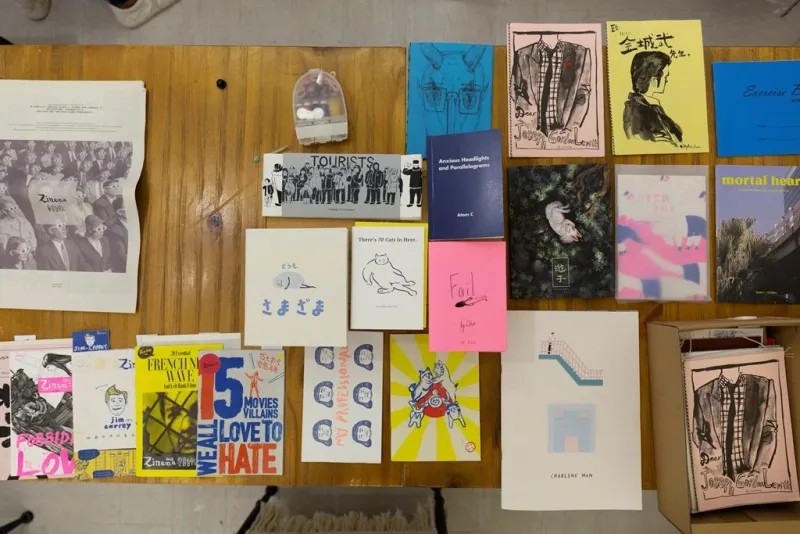
Photo: risograph zine printing basement workshop indie publishing, via www.taipavillagemacau.com
There's a Risograph machine in a basement in East Nashville that has printed more genuinely strange literature in the past three years than most mid-size publishing houses have greenlit in a decade. It belongs to a collective called Mudmouth Press — five people, no investors, no distribution deal — and their latest run of 200 hand-numbered copies sold out in four days, mostly through word of mouth and a single Instagram story.
This is what the zine renaissance looks like up close: unglamorous, ink-stained, and weirdly thriving.
The Format That Refused to Die
Zines — self-published, small-circulation magazines — have been a fixture of underground culture since at least the 1930s, when science fiction fans started mimeographing newsletters for each other. Punk gave them a new identity in the '70s. Riot Grrrl weaponized them in the '90s. And then the internet arrived, and everyone assumed that was that.
Except it wasn't. According to Etsy sales data and anecdotal reports from zine fests across the country, demand for physical, self-published work has quietly surged since around 2019, accelerating through the pandemic years and showing no signs of cooling. The Portland Zine Symposium, one of the oldest gatherings of its kind in the US, reported record vendor applications in 2023. Chicago's Quimby's Bookstore, a longtime underground publishing institution, says zine sales have outpaced expectations for three consecutive years.
So what's going on?
Making Something Real
Ask anyone deep in the scene and you'll get some version of the same answer: people are exhausted by content. Not stories, not art — content. The frictionless, endlessly scrollable, algorithmically optimized stuff that fills every screen in every pocket. Zines are the opposite of that. They require effort to find, money to buy, and actual physical attention to read.
"There's no notification pulling you away from a zine," says Daria Okonkwo, who runs Soft Static Press out of a shared studio space in Philadelphia's Kensington neighborhood. Her publications — dense, hand-illustrated poetry collections with print runs rarely exceeding 150 copies — have developed a devoted following she describes as "people who are tired of being managed by their devices."
Okonkwo prints everything herself on a secondhand duplicator she bought off Craigslist for $300. Each issue takes about two weeks to produce from first draft to final staple. The economics are razor-thin: she charges between $6 and $12 per issue, covers printing costs, and considers anything left over a bonus. She's not getting rich. That's not really the point.
The Micro-Economy of Self-Publishing
The financial reality of zine-making is worth sitting with for a second, because it reveals something interesting about why people do it. Most zine publishers operate at near-zero margins. Risograph printing — the preferred method for its vivid colors and slightly imperfect, tactile quality — costs money. Paper costs money. Postage, for those who sell online, eats into whatever's left.
And yet collectives keep forming. In Brooklyn, a group called Tender Document publishes experimental fiction in editions of 75. In Austin, Loma Alta Editions focuses on Latinx voices producing work that mainstream literary journals have consistently overlooked. In Minneapolis, a collective called Permafrost (named, they'll tell you, for what lies beneath the surface of things) puts out quarterly visual poetry anthologies that have developed a cult following in arts communities from Seattle to Miami.
What these operations share isn't profitability — it's intentionality. Every copy is a deliberate object. The limited print run isn't a marketing gimmick; it's a structural reality that makes each issue genuinely scarce. Readers who find them feel like they've discovered something, because they have.
Gen Z and the Hunger for the Handmade
It's tempting to frame this as a nostalgia play, but that misreads the demographics. A significant chunk of today's zine creators and consumers are in their early-to-mid twenties — people who grew up entirely online and are now, somewhat deliberately, choosing to engage with media that has weight and texture and a finite existence.
Marco Reyes, 24, runs a zine distro out of his apartment in Los Angeles, meaning he stocks and ships zines from dozens of small publishers across the country. He started it during the pandemic because he wanted to read things that felt "chosen rather than served to me."
"I know exactly who made every zine I carry," he says. "I know what printer they used, roughly how many copies exist. That specificity matters. It's the opposite of a playlist that just keeps going."
This isn't anti-technology so much as it's pro-texture. Most zine publishers maintain active social media presences — that's often how buyers find them. The zine itself is the endpoint, the artifact that lives outside the feed.
What Gets Published Here
One of the most interesting aspects of contemporary zine culture is the sheer range of what's being made. There are horror zines, trans memoir zines, zines devoted entirely to one very specific type of regional mushroom. There are perzines (personal zines, essentially public diaries) and fanzines about obscure 1970s Bulgarian cinema. There are zines that read like academic journals and zines that look like ransom notes.
The unifying principle isn't genre or aesthetic — it's the fact that none of this content would survive a traditional editorial gatekeeping process. It's too weird, too niche, too uncommercial, too personal. Zines exist precisely because the mainstream publishing industry has no use for them.
Which is, of course, exactly what makes them interesting.
Finding the Underground
If you want in, the entry points are real but require a little effort — which is sort of the whole point. Zine fests happen in most major American cities throughout the year; a quick search will surface your nearest one. Distros like Reyes's LA operation ship nationally. Quimby's in Chicago and Atomic Books in Baltimore are physical stores worth visiting if you're in range.
Or you could just start talking to people. The zine community, for all its underground mystique, tends to be pretty welcoming. Show up curious. Bring cash. Leave with something that nobody else on your block has read.
That's the whole deal, really. SubStrata has been saying it from the start: the most interesting stuff is never right on the surface. Sometimes you have to get a little ink on your hands to find it.