Dead Format Walking: The Obsessive World of Cassette and Minidisc Collectors Who Never Got the Memo
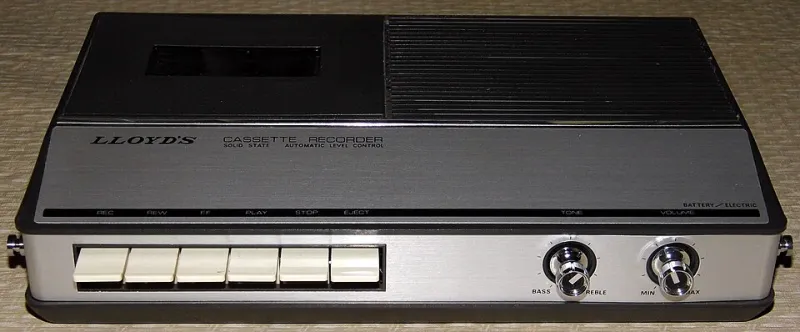
Photo: Joe Haupt from USA, CC BY-SA 2.0, via Wikimedia Commons
Somewhere in a climate-controlled spare bedroom in Tucson, Arizona, there are approximately 4,000 cassette tapes arranged by genre, then artist, then chronology within each artist's catalog. The owner of this collection — a 38-year-old HVAC technician named Curtis Beale — has spent the better part of fifteen years and somewhere north of $12,000 assembling it. He has no plans to stop.
"People think I'm being ironic," he says, laughing. "I'm not being ironic. This is just what good music sounds like."
The Formats That Streaming Left Behind
Cassette tapes peaked commercially in the late 1980s. Minidiscs — Sony's compressed-audio format, technically brilliant and commercially star-crossed — had their brief American moment in the mid-1990s before being steamrolled by the CD and then, almost immediately, by early MP3 players. Eight-tracks are even older, a punchline format that somehow still has devotees. DAT tapes, used primarily in professional recording studios, barely registered with consumers at all.
All of these formats are, by any reasonable commercial definition, dead. And all of them have active, passionate collector communities that are, if anything, growing.
The reasons why are complicated, and they tell us something genuinely interesting about the relationship between technology, authenticity, and how we actually want to experience music.
Tape Isn't Retro — It's a Different Thing Entirely
Let's get one thing clear upfront: the collectors and audiophiles in this world are not operating on nostalgia alone. Many of them — particularly the younger ones — grew up after these formats had already been declared obsolete. For them, there's no childhood memory to chase. The appeal is something else.
Part of it is sonic. Analog tape has a particular warmth and saturation that digital formats don't replicate, a slight compression and harmonic distortion that many listeners find not just acceptable but actively pleasing. This isn't a myth or a placebo — it's a measurable acoustic phenomenon. Whether it's better than digital is subjective, but it's genuinely different, and different is exactly what a lot of people are looking for.
"Streaming has made everything sound the same," says Priya Nair, 29, who collects minidiscs and runs a small blog documenting her finds from thrift stores and estate sales across the Pacific Northwest. "Not literally — the recordings are different — but the experience of listening is identical no matter what you're playing. Same app, same interface, same shuffle. Putting on a minidisc and knowing it's going to end in 74 minutes changes how I hear it."
The Hunt
For collectors, the format itself is only half the story. The other half is the search.
Thrift stores remain the primary hunting ground, though experienced collectors will tell you the easy finds dried up years ago. Goodwill bins that once yielded remarkable discoveries now get picked over within hours of new stock arriving, partly because more people are looking and partly because resellers with phone-scanning apps have gotten efficient at cherry-picking value. The real finds now tend to come from estate sales, storage unit auctions, and eBay rabbit holes that require a specific kind of patience.
Beale, the Tucson collector, describes spending three hours on a Sunday morning working through a single estate sale in a retirement community outside Phoenix. He came away with a near-complete run of Grateful Dead live tapes from the late 1970s, Dolby-encoded, in original cases. "That's a good morning," he says, with a tone that suggests this is an understatement.
Beyond thrift stores and estate sales, there's an active online marketplace — Discogs has expanded to cover cassettes more seriously in recent years, and dedicated forums on Reddit and more obscure corners of the web serve as trading posts and appraisal communities. The prices for genuinely rare tapes have risen steadily, with certain limited-edition releases from small labels commanding hundreds of dollars.
The Labels Still Making Tape
Here's where it gets genuinely interesting from a SubStrata perspective: there are labels actively releasing new music on cassette, minidisc, and other abandoned formats, with no plans to make that music available anywhere else.
Not as a promotional gimmick. Not as a collector's edition supplement to a streaming release. As the primary format.
Labels like Hausu Mountain in Chicago, Crash Symbols, and dozens of smaller operations release limited runs of experimental, ambient, and underground music on tape specifically because the format enforces scarcity and creates a listening experience that streaming can't replicate. A 50-copy cassette run of an ambient noise record is a fundamentally different cultural object than a Spotify upload. It exists in finite physical space. It can wear out. It will eventually be gone.
Some labels have gone even further. A small operation out of Portland called Null Carrier has been releasing experimental electronic music exclusively on minidisc since 2021 — a format that requires specific, increasingly difficult-to-find hardware to play. Their releases sell out immediately to a small but intensely committed audience. The difficulty of access is part of the point.
What This Says About Streaming
There's a critique of the streaming era embedded in all of this, and it's worth naming directly. Platforms like Spotify and Apple Music have done something remarkable: they've made virtually all recorded music available to virtually everyone for a monthly fee smaller than the cost of a single album. This is, by most measures, an extraordinary achievement.
It has also, arguably, made music feel cheap. Not in price — in weight. When everything is available always, nothing feels particularly precious. The algorithm decides what you hear next. Discovery happens to you rather than because of you.
Collectors of dead formats are, consciously or not, pushing back against this. They're choosing friction. They're choosing scarcity. They're choosing a listening experience that requires physical setup, has a defined endpoint, and occasionally eats your tape — and all of that inconvenience somehow makes the music feel more real.
"I listen to maybe five albums a week on tape," says Nair. "I listen to probably fifty things on streaming and remember almost none of them. The tape ones I remember."
Getting In
If this world is calling to you, the barriers to entry are lower than you might think. Functioning cassette players can be found at thrift stores for a few dollars. Basic Walkmans go for $15-30 on eBay. The tapes themselves, for anything less than genuinely rare, are cheap.
Minidiscs require a bit more investment — working players are harder to source and run $40-100 for a reliable unit — but the community around them is welcoming and knowledgeable, with active subreddits and Discord servers happy to walk newcomers through the basics.
The harder thing to acquire is the mindset: the willingness to slow down, to accept limitation, to let a format's physical constraints shape how you engage with music. That's not a hardware problem. But if you've made it this far into a SubStrata article about cassette collectors, you probably already know which side of that divide you're on.