Reel Weird: A Field Guide to America's Strangest Film Festivals Nobody Talks About
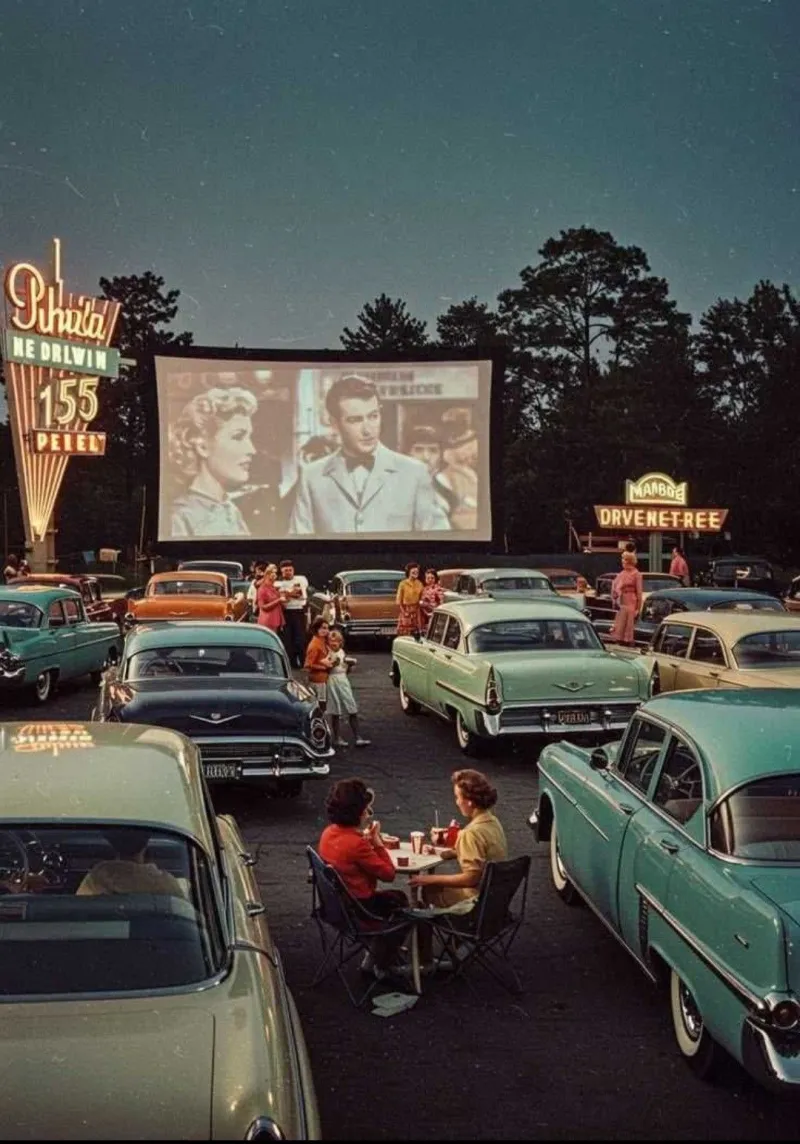
Photo: vintage drive-in movie theater retro film projector outdoor screening, via i.pinimg.com
Every January, a particular kind of film person makes the pilgrimage to Park City, Utah. They wait in lines. They network aggressively. They drink expensive coffee and talk about distribution deals. And look — that's fine. Sundance is Sundance.
But there's another circuit entirely. One that doesn't have a publicist or a press junket or a celebrity sighting tracker. It's the circuit of the genuinely peculiar — film festivals so specific, so regionally weird, so completely unbothered by mainstream validation that they've developed cult followings that rival anything happening at the prestige level.
SubStrata went looking for the best of them. Here's what we found.
The B-Movie Blowout: Portage, Ohio
Held every August in a drive-in theater that somehow survived the multiplex era, the Portage B-Movie Blowout is exactly what it sounds like — and also somehow more than that. The festival runs across one long weekend and screens nothing but low-budget films from the 1960s through the 1990s, with a programming committee that takes its curatorial responsibility genuinely seriously.
What makes it weird and wonderful is the crowd. Families show up in lawn chairs. Film scholars argue in the parking lot. A woman in a full creature suit wanders between cars during intermission. Nobody is quite sure if she's part of the event or just a local.
Attendance: Roughly 800-1,200 people per weekend depending on weather and lineup. No advance streaming. No VOD companion. You go or you miss it.
Why you should go: The programming leans toward genuinely forgotten films — not the cult classics you've already seen, but the ones that fell between the cracks of VHS distribution and never got a proper second look. The discovery rate is high. The vibe is maximum.
The Frozen Film Festival: Fairbanks, Alaska
Held in January — deliberately, aggressively in January — the Frozen Film Festival in Fairbanks operates on the premise that cinema is best experienced when you're slightly suffering. Screenings happen both indoors and, for certain hardy-soul events, outdoors in temperatures that regularly drop below zero.
The programming focuses on films about isolation, survival, and the psychological weight of extreme environments. Think less "cozy winter movie" and more "existential confrontation with the void." Past lineups have included obscure Scandinavian horror, forgotten Cold War-era science fiction, and a truly remarkable selection of documentary films about people who chose to live alone in genuinely dangerous places.
Attendance: Small by design — rarely more than 400 attendees over the full festival run. Hotel rooms in Fairbanks in January are easier to come by than you'd think.
Why you should go: There is no experience quite like watching a film about human fragility while the temperature outside is doing its best to prove a point. The programming is genuinely excellent and the audience is the most committed group of film lovers you'll encounter anywhere.
Trash Cinema Weekend: Louisville, Kentucky
Louisville keeps coming up in underground cultural conversations, and its Trash Cinema Weekend is a big reason why. Running since the early 2000s out of a repurposed theater in the NuLu neighborhood, this three-day festival celebrates exploitation cinema, grindhouse aesthetics, and the deeply unfashionable art of the deliberately bad film.
But here's the thing — the programming is smart. The festival doesn't just throw garbage at the wall. Each year has a loose theme (recent examples include "When Animals Attack" and "The Decade That Taste Forgot: 1987"), and the selections are curated with genuine critical thought about what these films reveal about American culture, anxieties, and appetite.
There are panel discussions. There are filmmakers in attendance — sometimes elderly, sometimes bewildered, always delighted that anyone still cares. There's a late-night block that starts at midnight and ends whenever the last person standing gives up.
Attendance: Sells out most years at around 600 passes. Tickets go on sale with minimal fanfare and move fast through word of mouth.
Why you should go: The combination of irreverence and genuine critical engagement is rare. You'll laugh a lot and then have a surprisingly serious conversation about gender politics in 1970s horror. It's that kind of festival.
The Celluloid Séance: New Orleans, Louisiana
New Orleans was always going to have the best weird film festival. The Celluloid Séance leans fully into the city's relationship with the supernatural, the gothic, and the genuinely uncanny, programming films that exist at the edges of horror, surrealism, and experimental narrative.
What sets it apart from other horror-adjacent festivals is the commitment to non-English language and non-American cinema. A significant portion of each year's programming comes from Latin America, Southeast Asia, and Eastern Europe — regions with horror and surrealist traditions that American audiences rarely encounter. The festival pairs these with local Louisiana filmmakers working in adjacent territory, creating a genuinely cross-cultural program.
Screenings happen in venues across the city, some of which have their own histories that add an extra layer of atmosphere. A former funeral parlor. A theater that flooded during Katrina and was rebuilt by its owners rather than sold. A courtyard screening series that begins at dusk.
Attendance: Varies by venue, with total festival attendance estimated around 2,000 across all events. Some screenings are intentionally tiny — 40 seats in a candlelit room.
Why you should go: The programming is legitimately excellent and the setting is legitimately haunted. Not metaphorically. Several of the venues have documented histories that you'll read about on the walk home and then wish you hadn't.
The Anti-Festival: Marfa, Texas
Marfa already has a reputation as an arts destination, but the annual Anti-Festival — which resists being called a festival, resists being scheduled firmly, and resists most conventional event structures — operates on a different frequency entirely.
Typically announced two to three weeks in advance, it runs for four days and screens experimental, non-narrative, and structurally challenging film and video work in locations around Marfa and the surrounding desert. Some screenings happen in abandoned buildings. One year, a program was screened on the side of a grain elevator at 3 AM.
There's no jury. No awards. No competition. Just work that the organizers — a rotating collective that changes composition every year — find worth showing.
Attendance: Intentionally uncounted. Somewhere between 200 and 500 people typically make the trip.
Why you should go: If you've ever felt like mainstream film culture wasn't asking hard enough questions about what cinema can actually be, the Anti-Festival is the answer to that feeling. It's challenging, occasionally maddening, and genuinely unlike anything else on the American festival calendar.
How to Find More
The festivals listed here are, by design, not easy to find through conventional channels. Most don't have robust social media presences. Some actively avoid coverage. The best way to locate events like these is through local film societies, independent theater mailing lists, and the kind of word-of-mouth that still requires actually talking to people who care about film.
The underground cinema circuit rewards the curious and the committed. It is not optimized for convenience. And that, as with most things worth finding, is exactly the point.