Steel Balls and Solder Irons: Inside the Garage Movement Refusing to Let Pinball Die
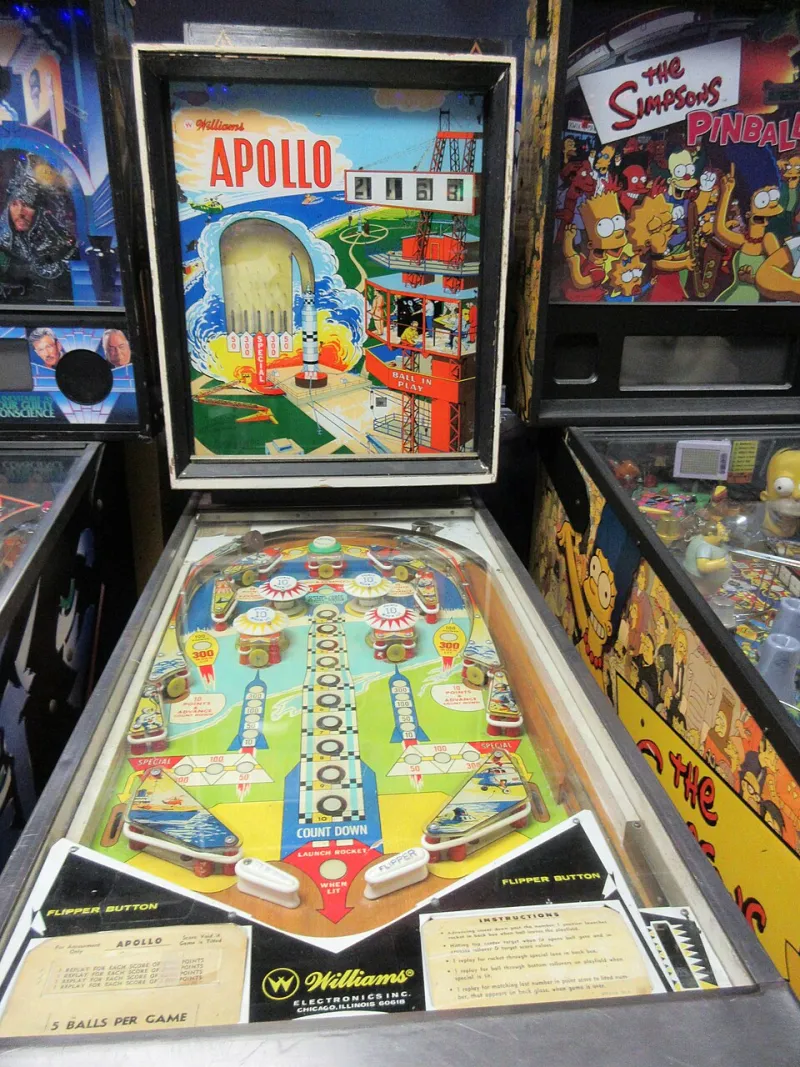
Photo: Infrogmation of New Orleans, CC BY 2.0, via Wikimedia Commons
There's a machine in Rob Delgado's garage in Allentown, Pennsylvania, that was built the year Nixon resigned. It still works. Mostly. When the "bonus" light sticks, he thumps the cabinet in a specific spot — a repair technique passed down, unofficially, through sixty years of bar owners.
Delgado is one of an estimated tens of thousands of American hobbyists keeping electromechanical pinball machines alive without manuals, without factory support, and often without a single replacement part that still exists. And lately, he's noticed something strange: kids at his league nights. Actual teenagers. Putting their phones face-down on the snack table.
The Salvage Economy
You can't order a 1972 Gottlieb pop bumper from Amazon. So the pinball underground runs on what players call the parts stream — dead machines bought sight-unseen from Craigslist, barn finds, and the occasional estate auction where a widow just wants the thing out of the basement.
A nonworking machine is never just a machine. It's an organ donor. The playfield might be shot, but the score motor, the stepper units, the coils — those live on in other cabinets, sometimes for decades. Serious collectors have spare parts organized like surgical supplies. There are guys who can identify a coil sleeve by feel, in the dark, at a flea market, and they are not being dramatic about it.
The community's knowledge base lives in scattered forums, photocopied schematics, and a legendary collection of scanned repair guides passed around like samizdat. When a rare machine develops a new failure mode, someone writes a fix, and the fix propagates through the network the way folk songs used to.
Leagues in Unlikely Places
Competitive pinball never actually died — it just retreated. Today the International Flipper Pinball Association tracks thousands of ranked players in the US, and most of them compete not in arcades but in bars, breweries, pizza shops, and private basements. The machines need constant attention, so the model that works is symbiotic: a bar hosts a machine, a collector maintains it, a league fills the joint on Tuesdays.
The geography is telling. Some of the healthiest leagues in the country are in Rust Belt towns and mid-size cities — places with old bar stock, cheap rent, and a cultural memory of what an arcade even was. The machines out there aren't museum pieces under glass. They're played hard, repaired often, and loved the way a pickup truck is loved.
Why Unpatchable Is the Point
Ask the new generation why they're drawn to a game with no save states and no updates, and you get variations on a theme. Everything about modern gaming is designed to be revised after the fact — patched, balanced, reworked. A pinball machine is a physical commitment. The rules were set in Chicago in 1974 and they will never change. If you want to get better, you get better. The machine stays exactly as hard as it always was.
There's also the small matter of the physics. A pinball is a half-pound steel sphere moving at real speeds through real space, and no screen has ever replicated what it feels like when a perfectly aimed shot rattles through a bank of drop targets and the whole cabinet shudders under your hands.
The Boutique Boom
The renaissance has a supply side too. A wave of independent manufacturers — operations with a handful of employees, often literally in a warehouse — now builds brand-new machines in small runs, priced like instruments rather than toys. They sell to the same collectors who keep the old EMs alive, and the two scenes feed each other: new machines bring fresh players, fresh players fall in love with the old steel.
Delgado, for his part, has no interest in selling the Nixon-era machine. It plays crooked, the left flipper is weak, and he's beaten it exactly once. "A patch can't fix that," he says, sounding pleased. "Only practice can."