No Cameras, No Listings, No Mercy: Dispatches From America's Off-Grid Variety Underground
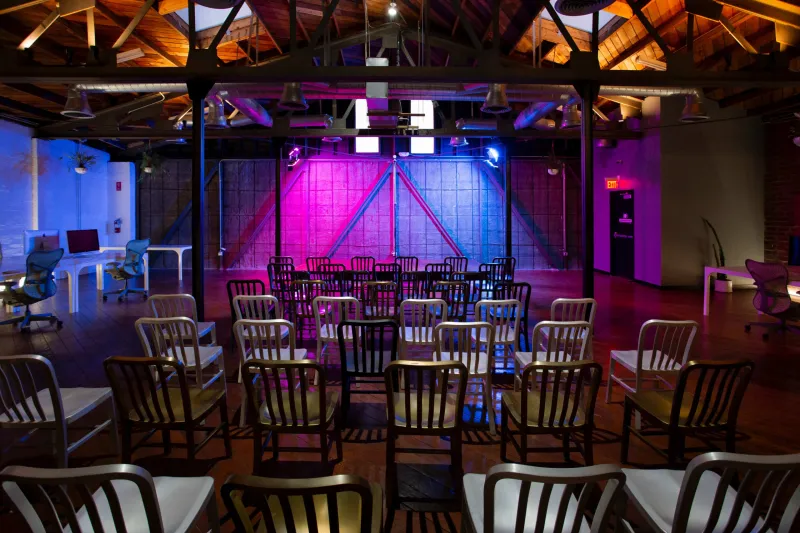
Photo: intimate underground live performance warehouse folding chairs stage lights, via img.peerspace.com
The address arrives by text, the day of the show. A cross street in South LA, a door with a chalk X, a knock pattern you're told once and expected to remember. Inside: forty folding chairs, a hand-built marionette stage, and a bar made from a repurposed church pew. The show runs ninety minutes. Nobody films it. If you describe the venue online, you don't get invited back.
Welcome to the underground variety scene — a national archipelago of puppet cabarets, close-up magic rooms, and sideshow revivals that have, whether by ideology or accident, opted out of the internet entirely.
The Puppet Cabaret That Sold Out Without a Webpage
Start in Chicago, where a rotating cast of puppeteers has run an adults-only cabaret in a Logan Square warehouse for the better part of a decade. The material is not for kids — one recurring bit involves a felt owl delivering a monologue about mortgage rates that regulars describe as "devastating." The show has no ticketing link. You join a mailing list, you get a date, you Venmo a person with a first name only.
The puppeteers' reasoning is practical as much as romantic: venues get shut down when they trend, and performers get burned out when a night that held thirty people suddenly holds three hundred phones. Keeping the audience small keeps the material weird, and keeping it weird is the entire product.
Magic You Have to Be Close Enough to Cheat At
In Portland, Oregon, a close-up magic show runs in the back room of a dive bar on Division Street, maxing out at twenty-five seats. There's no stage. There's barely a table. The magic happens at a distance where, theoretically, you could catch the sleight — and the performers will tell you that's the point. Proximity is the gimmick. You can't experience this on a screen because the whole act depends on you being six feet away, leaning in, failing to see it.
The magicians in this circuit trade work like contraband. Routines developed for these rooms are never posted, never sold, never performed for cameras. Some of the best working material in American magic exists in maybe a few hundred people's memories. Ask a performer to explain why and you'll get a shrug with a philosophy inside it: if it can be streamed, it's already over.
The Sideshow That Tours by Rumor
The oldest strain of this world is the sideshow revival, and the most nomadic example is a five-person troupe that books itself into borrowed storefronts, VFW halls, and the occasional parking lot across the Southwest. Fire eating, glass walking, a strongman act that ends with an apology to the floor. They don't have a name you'd find with a search engine — the name they use changes, sometimes yearly, for reasons involving an old dispute and possibly a court case nobody will discuss.
Their routing happens through a chain of hosts: bar owners, warehouse collectives, one very committed retiree in Tucson. Each show's location is confirmed roughly 48 hours out. Attendance is a mix of scene regulars and the perpetually curious, who hear about it the way people have always heard about the good stuff — from someone who was there.
Why Offline Is the Business Model
It's tempting to read this scene as anti-technology, but the performers mostly frame it as pro-something-else. These shows compete against infinite content by offering the one thing content can't: an event that ends, that you had to be physically present for, that cannot be rewatched, clipped, or ratio'd. Scarcity isn't a limitation here. It's the entire appeal.
The economics are small but real — door splits that put a few hundred dollars in a performer's pocket, enough to justify building a marionette stage in your garage. Nobody's quitting a day job. Everybody knows somebody who tried to grow the audience and lost the room that made it worth doing.
The night in South LA ends with the owl puppet's final bow and a reminder, delivered by the host without irony: tell your friends in person. Then the chairs fold, the church-pew bar goes back in a van, and the chalk X gets wiped off the door before midnight.