Ghost Channels: The Obsessive Listeners Cataloging Radio Transmissions the World Pretends Don't Exist
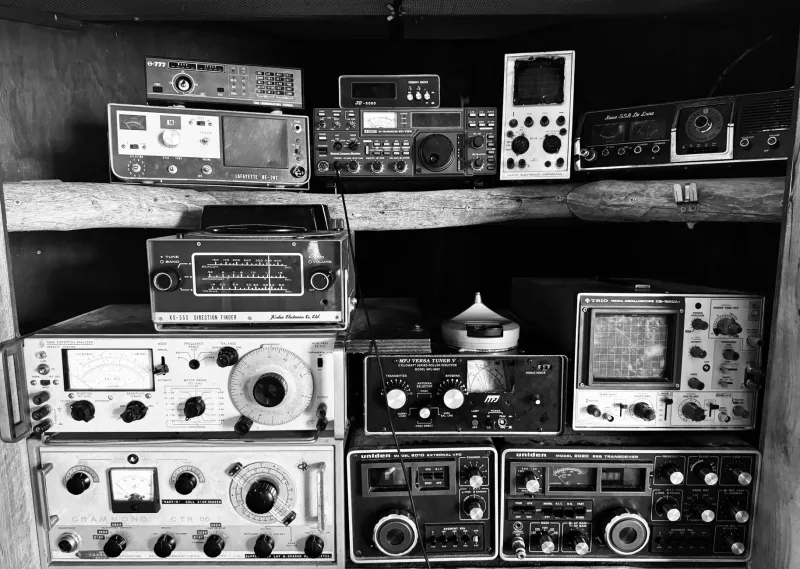
There's a frequency out there — somewhere in the 4 to 30 MHz band — where a synthetic voice reads strings of numbers in Spanish, pauses, then does it again. It's been doing that, more or less, for longer than most of the people listening to it have been alive. Nobody official will tell you what it is. Nobody unofficial can prove what it is. But a very specific kind of person in a very specific kind of basement has been recording it anyway, logging every transmission with the dedication of a monk copying scripture.
Welcome to the world of shortwave monitoring — or SWLing, as its practitioners call it. It's a hobby that never quite died, even as the internet swallowed every other information channel whole. And right now, it's having something of a quiet renaissance, drawing in a new generation of listeners who find comfort, conspiracy, and genuine mystery in the static.
The Signal That Shouldn't Be There
Most people's relationship with radio ends at FM. Maybe AM if they're driving through dead zones on a highway. But shortwave operates on a fundamentally different physics — signals bounce off the ionosphere and travel thousands of miles, which means a receiver in a Cleveland living room can pull down a transmission originating somewhere in Central America, Eastern Europe, or, more intriguingly, nowhere anyone can definitively identify.
Number stations are the crown jewel of this world. These are shortwave broadcasts — often monotone, often mechanically voiced, sometimes eerily musical — that transmit sequences of numbers or letters in apparent code. Intelligence agencies have never officially acknowledged them. Governments don't claim them. And yet they've been documented continuously since at least the Cold War era, with some researchers arguing they predate even that.
The Conet Project, a now-legendary compilation released in the late nineties, gathered recordings of these transmissions and pressed them to vinyl. It remains one of the stranger artifacts in American underground music culture — a record of sounds that technically don't exist, distributed through channels that barely existed themselves. That project lit a fuse that's still burning.
The Logging Culture
What separates the serious shortwave community from casual listeners is documentation. These people log everything. Frequency, time (always UTC), signal strength, content summary, receiver setup, antenna type, atmospheric conditions. Online communities like the Shortwave Radiogram forums and the HFUnderground boards are filled with these logs — thousands of entries representing tens of thousands of listening hours.
The goal isn't just collection for its own sake. Cross-referencing logs from listeners in different states — sometimes different countries — allows the community to triangulate transmitter locations, identify patterns in broadcast schedules, and build historical records that no official institution is building. When a number station goes silent after years of regular transmission, these logs are the only evidence it ever existed.
"Most of what we catch will never be explained," says one hobbyist who's been logging signals from his rural Tennessee property for nearly fifteen years and asked not to be identified beyond his callsign. "And that's fine. The point isn't always the answer. Sometimes it's just making sure someone was paying attention."
The Gray Zone
Here's where it gets legally interesting. In the United States, it is entirely legal to receive radio transmissions on virtually any frequency. Passive listening is protected. What you cannot do — under the Electronic Communications Privacy Act and related statutes — is decrypt intercepted communications you're not authorized to receive, or act on information gleaned from them. The line between "I heard something weird" and "I decoded a military transmission" is one that experienced hobbyists navigate carefully.
Most stay well clear of anything that looks like active military or federal law enforcement traffic. The community has its own informal ethics around this — not out of deference to authority, exactly, but out of a pragmatic understanding that the hobby survives on its legal standing. Push too hard in the wrong direction and the whole enterprise gets scrutinized in ways nobody wants.
That said, plenty of what floats through the shortwave band is ambiguous. Utility stations, numbers broadcasts, "buzzer" transmissions like the famous Russian signal known as UVB-76 — these exist in a documentation gray zone where logging them is legal, understanding them is speculative, and talking about them publicly is, at minimum, unusual.
Software Defined Radio Changed Everything
The modern entry point into this world is the software defined radio, or SDR. For under thirty dollars, a USB dongle turns any laptop into a capable shortwave receiver. Pair it with free software like SDR# or GQRX and suddenly the entire electromagnetic spectrum becomes navigable. The hardware barrier that once kept this hobby rarefied has essentially collapsed.
This democratization has had predictable effects. The community is bigger and noisier than it used to be. There are more logs, more forums, more YouTube channels where enthusiasts narrate their frequency sweeps in real time. But it's also produced something genuinely valuable: distributed monitoring networks where dozens of listeners across the country can simultaneously capture the same transmission from different angles, creating a richer picture than any single listener could.
Projects like WebSDR allow anyone with a browser to tap into receiver arrays operated by universities and amateur radio clubs, pulling signals from hardware physically located in places like the Netherlands or rural Kansas without owning a single piece of equipment. The collective ear has gotten very large.
Why It Still Matters
In a moment when most people assume surveillance and communication happen in encrypted digital packets, the persistence of analog shortwave feels almost anachronistic. But that's partly why it matters. Encrypted digital communications are, by definition, invisible to civilian oversight. Shortwave transmissions — even mysterious ones — are at least audible. They can be documented. They can be argued about.
There's also a preservation angle that resonates with the broader SubStrata ethos. The history of clandestine broadcasting, numbers stations, and unlicensed international transmission is almost entirely a community-documented history. The official record doesn't exist. What exists is the collective archive of people who stayed up late with headphones on, writing down what they heard.
That archive is imperfect, contested, and occasionally paranoid. But it's also one of the most sustained acts of unofficial record-keeping in American hobbyist culture — a decades-long project to prove that the signals nobody's supposed to hear are, in fact, being heard.
Somewhere out there, right now, a voice is reading numbers into a microphone. And somewhere else, probably in a basement, someone is writing them down.