Shelf Life: The Shadow Librarians Quietly Stockpiling Books America Is Trying to Forget
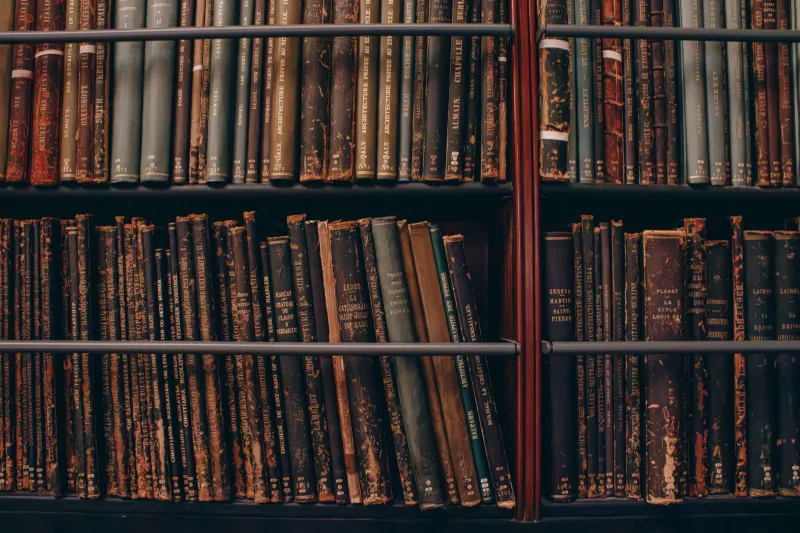
Somewhere in a climate-controlled storage unit outside Columbus, Ohio, there are approximately 4,000 books that various school boards, publishers, and municipal governments have decided you probably shouldn't read. They're organized by a retired school librarian who goes by "Marguerite" online and won't share her last name. She's been doing this for about six years. She doesn't consider herself an activist. She considers herself a filing system.
"I'm not making a political statement," she told us over email. "I'm just making sure the statement someone else already made doesn't get erased."
This is the world of shadow archiving — a loose, deliberately under-the-radar movement of people who are systematically acquiring, cataloging, and storing books that are facing some form of institutional pressure. Bans. Pulping orders. Quiet removal from digital platforms. Out-of-print status engineered to sidestep controversy. The reasons vary. The response is the same: get the books, keep the books, make sure someone knows where they are.
What Gets Saved and Why
The obvious assumption is that this is all about the high-profile culture war stuff — the titles that make the news cycles every couple of years when a school board somewhere votes to pull them from library shelves. And yes, those books are absolutely in the mix. Works addressing LGBTQ+ identity, books dealing with race and historical trauma, titles that make certain parent groups uncomfortable — they show up in these archives in bulk.
But the scope is wider than most people realize. Collectors in this network are also chasing academic texts that have been quietly revised or retracted under political pressure. Self-published memoirs from whistleblowers whose books got scrubbed from Amazon without explanation. Regional histories that certain local governments found inconvenient. Out-of-print children's books from the mid-twentieth century that depicted non-white protagonists and got quietly discontinued when distribution became "unprofitable."
One archivist based in the Pacific Northwest — who operates under the handle "PageFault" in the communities where these people communicate — described his collection as "a museum of discomfort." His shelves hold first editions of books that were pulped before wide distribution, advance reader copies of novels that never made it to publication after author controversies, and a growing section he calls "the disappeared" — digital-only titles that were delisted from every major platform and exist now only in downloaded files and the occasional physical proof copy.
"Publishers don't advertise when they memory-hole something," PageFault said. "There's no press release. The book just... stops being available. And most people never notice."
The Network Underneath the Network
These aren't people who found each other at a conference. The community assembled itself through overlapping circles — library science forums, rare book collector spaces, academic freedom advocacy groups, and a few corners of the internet that operate more like invitation-only reading clubs than anything else. Communication happens through encrypted messaging apps, private Discord servers, and occasionally old-school mailing lists that feel deliberately retro.
There's no central organization, no membership dues, no official anything. What exists instead is a culture of reciprocal tip-sharing. Someone in Texas hears that a school district is pulling a specific title and alerting the network means buyers in three states start hitting used bookstores and estate sales within the week. A contact at a small press warns that a title is about to go out of print permanently — the group pools resources to acquire as many copies as possible before the last run sells through.
Marguerite described the vibe as "extremely unglamorous mutual aid." There are spreadsheets. There are arguments about cataloging systems. There are occasional disputes about whether a particular book actually meets the threshold for inclusion or whether someone is just personally attached to a title that had a normal commercial death. It is, by all accounts, extremely nerdy.
"We had a forty-five-minute debate once about whether a book that got bad reviews and just didn't sell counted as 'suppressed,'" she said. "It does not count. We have standards."
The Legal Fog They Navigate
Owning books is legal. Collecting books is legal. Sharing books gets complicated fast, and everyone in this world knows it.
The tension point is access. These archives aren't public libraries. Most operate on a strict personal-collection basis, which means the books are preserved but not necessarily circulated. Some collectors have informal arrangements — researchers who can visit, trusted contacts who can borrow — but anything resembling a lending library triggers questions about copyright, about public performance rights for texts, about the terms of service of digital files that may have been downloaded before a title disappeared.
A few people in the network have legal backgrounds and serve as informal advisors, but the consensus seems to be: keep it small, keep it quiet, keep it personal. The goal isn't to run a shadow public library. The goal is to make sure the books exist somewhere when the time comes that someone needs to prove they existed at all.
"History has a funny way of wanting receipts," one archivist put it.
What Preservation Actually Looks Like
Physical copies are prioritized when possible. Paper degrades, but it degrades slowly and predictably. Digital preservation is also happening — scans, OCR'd text files, redundant backups across multiple locations — but there's a shared skepticism about digital permanence in this community that feels almost philosophical. These are people who have watched ebooks disappear from Kindles overnight, who have seen entire digital storefronts shut down and take their catalogs with them. They trust paper.
Condition matters less than existence. A water-damaged paperback with a cracked spine still carries the text. Marguerite has a section she calls "the ugly shelf" — books that are barely holding together, purchased from thrift stores or salvaged from dumpsters outside schools during purges. They look terrible. They're irreplaceable.
"A beautiful book that doesn't exist anymore is worth nothing," she said. "An ugly book that does exist is worth everything."
The Longer Game
Nobody in this community seems to think they're winning, exactly. The rate of book challenges in the US has hit record highs in recent years, according to tracking done by organizations like PEN America and the American Library Association. Digital platforms continue to quietly remove titles with minimal transparency. Publishers make commercial decisions that effectively erase books from the accessible record.
But the shadow librarians aren't trying to win a news cycle. They're playing a longer game — the same game that monks played copying manuscripts, that samizdat networks played in Soviet-era Eastern Europe, that any culture plays when it decides that certain ideas are worth the effort of carrying forward.
The books on Marguerite's shelves in Columbus aren't going anywhere. Neither is she.
"Somebody's going to want to read these someday," she said. "I'm just making sure they can."