Bit Rot Hunters: The Obsessive Archivists Pulling Corporate Software From the Jaws of Oblivion
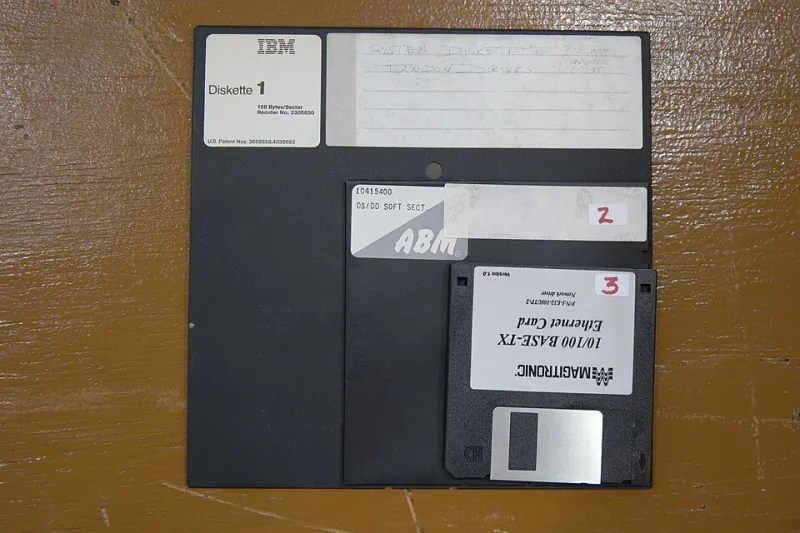
Photo: Kevin Savetz, CC BY 2.0, via Wikimedia Commons
Somewhere in a climate-controlled spare bedroom in suburban Ohio, a man named Dale is carefully feeding a 5.25-inch floppy disk into a Kryoflux controller board. The disk is from 1987. It contains the complete installation package for a regional accounting suite used by exactly three small businesses in the mid-Atlantic before the company folded in 1991. Nobody asked Dale to save it. Nobody's really waiting for it. He does it anyway.
"People always ask me why," Dale says, not looking up from his monitor. "I tell them: someone asked the same thing about old films once. Now we have film archives. Now we have the Library of Congress. The only difference is nobody made a movie poster for Lotus competitor number forty-seven."
Welcome to the floppy disk underground — a loose, largely anonymous network of hobbyists, retired IT professionals, and self-described digital archaeologists who have spent years quietly rescuing obsolete software from estate sales, dumpsters, office liquidations, and the back shelves of shuttered computer shops. They call what they do preservation. Critics — when they bother to engage at all — call it hoarding with extra steps. The community calls those critics short-sighted.
Dust and Magnetism
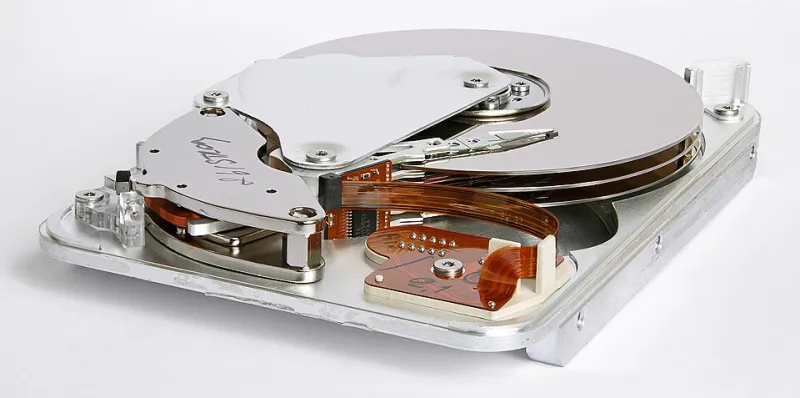
The problem with magnetic media is that it doesn't age gracefully. Floppy disks, Zip drives, Jaz cartridges, and early hard drives all rely on a thin layer of magnetic oxide coating a substrate — and that coating degrades. It flakes. It separates. It absorbs moisture. The phenomenon even has a name: bit rot. Every year that a disk sits in a garage or a filing cabinet is a year closer to permanent data loss.
Estimates vary, but archivists within the community generally agree that a significant percentage of software produced between 1975 and 1995 has already been lost entirely. Not just games — though those get most of the attention — but business productivity tools, educational programs, medical office management suites, early desktop publishing applications, and the enormous gray area of custom corporate software that was never commercially distributed in the first place.
The Internet Archive's software collection is one of the most visible efforts in this space, but the real work often happens at the individual level, in basements and home offices, with equipment that looks like it belongs in a 1990s RadioShack. Kryoflux boards and Greaseweazle controllers — specialized hardware that reads raw magnetic flux transitions rather than just the formatted data — have become essential tools, allowing archivists to extract information from disks that standard drives can no longer read at all.
Not Just Games
The mainstream conversation about software preservation tends to fixate on video games, and understandably so. Games are cultural objects with obvious emotional resonance. But the preservationists operating at the deeper end of this hobby are increasingly focused on the stuff nobody thinks to miss.
Take educational software. Programs like early Oregon Trail variants, regional math tutoring suites, and the dozens of CD-ROM encyclopedias that competed with Encarta represent a snapshot of how American schools conceptualized learning and technology in the late twentieth century. Many of these programs were produced by small regional publishers, never made it into major retail chains, and exist today in single-digit copy counts — if they exist at all.
Corporate software is even more obscure. Vertical-market applications built for specific industries — dental office management, real estate listing tools, inventory systems for regional grocery chains — capture something about how ordinary American businesses actually functioned before the internet rewired everything. Historians of technology and labor increasingly argue that this kind of software is primary source material, as valuable in its way as a ledger book or a union contract.
"We think of software as a product," says one archivist who goes by the handle MagOxide on the preservation forums. "But it's also a document. It encodes assumptions about how work gets done, who does it, what counts as a mistake. That's history. Boring history, maybe, but history."
The Hunt
Finding the software in the first place is its own discipline. Estate sales are a primary hunting ground — the death of someone who worked in tech or ran a small business in the 1980s can surface entire collections of disks that have sat undisturbed for decades. eBay and local Facebook Marketplace listings are monitored obsessively. Some archivists have relationships with office liquidators and e-waste recyclers who know to set aside magnetic media before it goes into the shredder.
The community has developed informal triage systems. Known software that's already been imaged and cataloged gets lower priority. Anything unidentified — a disk with a handwritten label, a proprietary format, a corporate logo that doesn't match anything in the databases — goes straight to the top of the queue.
Identification is often the hardest part. Early software frequently shipped without version numbers, with inconsistent labeling, or in custom packaging that's long since been discarded. Matching a recovered disk image to a known product can require cross-referencing forum posts, old magazine advertisements, and the fading memories of people who actually used the software thirty years ago.
The Archive Problem
Once the data is extracted, the question becomes: where does it go? The Internet Archive accepts contributions, but its intake process can be slow, and its focus tends toward completeness of known catalogs rather than the genuinely obscure. Community-run archives like Vetusware and various specialized forums fill some of the gap, but storage costs money, bandwidth costs money, and most of these operations run on donations and goodwill.
There's also a legal dimension that hangs over the entire enterprise. Much of the software being preserved is technically still under copyright, even if the companies that produced it have been dissolved for decades. The concept of abandonware — software that's no longer commercially available and whose rights holders are unknown or unresponsive — occupies a legal gray zone that nobody has fully resolved. Archivists generally operate under the assumption that preservation is a defensible use, but nobody's eager to test that in court.
Why It Matters
Back in Ohio, Dale has successfully imaged the accounting software. The process took forty minutes and required three attempts. He uploads the image to a shared repository, adds metadata, writes a brief description of the software's probable origin and use case, and moves on to the next disk in the stack.
He's not famous for this. He doesn't have a patron or a grant. The accounting software will probably be downloaded by fewer than a dozen people over the next decade, most of them other archivists.
But it will exist. And that, in the logic of the floppy disk underground, is the whole point. The mainstream cultural apparatus decides what gets preserved based on popularity, commercial value, and institutional prestige. These people are making a different argument — that the ordinary, the forgotten, and the genuinely useless-to-almost-everyone also deserve a record.
Beneath the surface of digital culture, the disks keep spinning. Slowly. And the archivists keep catching what falls off.