Save Before Closing: The Underground Network Hoarding the Internet's Disappearing Video
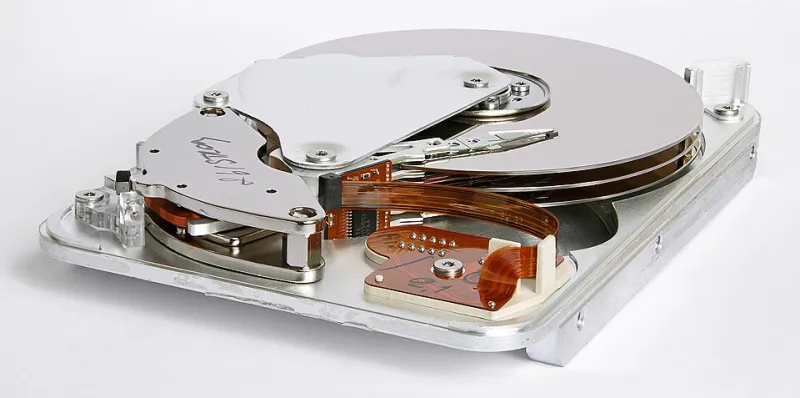
Photo: Eric Gaba (Sting - fr:Sting) This image was created with CombineZP by 11 ( It was created out of 11 single images.)., CC BY-SA 3.0, via Wikimedia Commons
The channel was called something like "Meridian Frequency." Experimental video essays, strange ambient loops, footage from dead malls in the American Midwest shot in a way that made them feel like dispatches from a parallel civilization. The creator posted sporadically between 2016 and 2020, never broke five thousand subscribers, and then one day the channel was just gone. No farewell video. No archive. No trace except a few screenshots on a forum thread where someone asked what happened to it.
For most of the internet, that's the end of the story. For a specific and growing community of digital preservationists, it's a starting gun.
The Scale of the Disappearing Act
YouTube deletes channels constantly. Some get pulled for copyright strikes. Some for terms of service violations. Some because the creator dies, or moves on, or just stops paying attention to an email account tied to a Google login. Some simply vanish when the algorithm stops surfacing them and the creator loses motivation and lets the account lapse. The platform has no meaningful public archival policy. When content goes, it's gone.
This isn't a niche problem. Researchers at universities have documented significant losses of video content from the platform's early years — tutorials, vlogs, short films, experimental work, documentation of subcultures that no longer exist in the same form. The Library of Congress has a web archiving program, but it's focused on text and metadata, not video files at scale. The Internet Archive's video collection is impressive but patchy. The stuff that falls through is enormous in volume and almost entirely invisible in its absence.
What you don't know is missing, you don't miss.
Meet the Hoarders (They Hate That Word)
The people doing this work prefer terms like "archivists" or "preservationists," and they're not wrong — the work is genuinely archival in intent. But the operational reality does involve a lot of external hard drives stacked in spare bedrooms, and a certain acquisitive energy that's hard to describe as anything other than hoarding with a mission statement.
They're organized loosely across a handful of forums, a few Discord servers, and some corners of Reddit. The tooling they use is largely open source — yt-dlp is the workhorse, a command-line utility that can pull video files from YouTube and dozens of other platforms. Some archivists run automated scripts that monitor specific channels and trigger a download whenever new content appears. Others work reactively, responding to community alerts when a channel goes dark or a creator announces they're deleting their work.
The more sophisticated operations have developed triage systems. Not everything can be saved — storage costs real money, and bandwidth is finite. So communities have developed rough criteria for what gets prioritized: channels with small subscriber counts but high creative specificity, creators who documented subcultures or scenes that aren't being covered anywhere else, experimental work that sits outside the commercial video economy entirely.
One archivist who goes by the handle "vestibule" online described the decision-making process to SubStrata as "trying to figure out what a historian in 2050 would want to have." That framing — preservation as an act of future-oriented empathy — comes up a lot in these communities.
The Micro-Creator Problem
Mainstream preservation conversations tend to focus on big losses: the pre-2012 Vine archive, early YouTube viral content, the first wave of web video that shaped internet culture. Those losses are real and documented. But the archivists in this underground network are mostly focused on a different category: the micro-creator.
Micro-creators are the people making genuinely interesting work for audiences in the hundreds or low thousands. They're not monetized. They're not optimized. They make stuff because they're compelled to make stuff, and they put it on YouTube because YouTube is there. A lot of them are making the most formally interesting video work happening anywhere — not because they're trying to be avant-garde, but because they're not constrained by the expectations that come with larger audiences.
These creators are also the most vulnerable to disappearance. They don't have fan communities large enough to notice when something goes wrong. They don't have management or labels or anyone whose job it is to maintain their digital footprint. When they stop uploading, the algorithm stops surfacing them, their subscriber count becomes a rounding error, and the platform has no particular incentive to keep their files warm.
The archivists notice. Or try to.
Who Decides What's Worth Keeping
This is where the community gets genuinely philosophical, and the conversations get heated. Preservation implies judgment. You can't save everything — or at least, the people doing this work can't — so you have to decide what matters. And deciding what matters is a power move, even when it comes from a place of genuine care.
Some archivists push back on any curatorial framework at all. Their argument: the whole point is to resist the logic of algorithmic value, which already decided these creators weren't worth amplifying. Bringing your own taste-based hierarchy into preservation just replicates the problem with different aesthetics. Save everything you can and let future researchers sort it out.
Others argue that undifferentiated hoarding isn't preservation — it's just storage. That real archival work requires context, metadata, some framework for understanding why a given piece of content is significant. Without that layer, you have hard drives full of files that nobody can navigate.
The tension doesn't resolve neatly. Different nodes of the network operate under different philosophies, and that's probably fine. The ecosystem is decentralized enough that no single approach dominates.
What Gets Lost When We Don't Look
There's a channel an archivist named Marcus saved in 2021 that documented the DIY punk scene in a mid-sized Southern city from about 2014 to 2018. Shaky footage from basement shows. Interviews with bands that never released anything on a label. A specific moment in a specific place, caught on a phone camera and uploaded without much ceremony. The creator's account got suspended for reasons that were never entirely clear.
Marcus has the files. He doesn't know what to do with them exactly. He's reached out to a couple of academic music libraries without much response. The files sit on a drive in his apartment in Atlanta, waiting for someone to build the infrastructure that would make them findable and usable.
That gap — between saving and making accessible — is the next frontier for this movement. The hoarding part, the community has figured out reasonably well. The library part is still being invented. But the fact that those files exist at all, that someone thought to grab them before the platform made the decision for everyone, is the whole argument for why this work matters.
The algorithm doesn't curate. It optimizes. Those are different things, and the difference is everything.