Off the Grid, On the Air: The Rogue Broadcasters Wiring Up America's Forgotten Corners
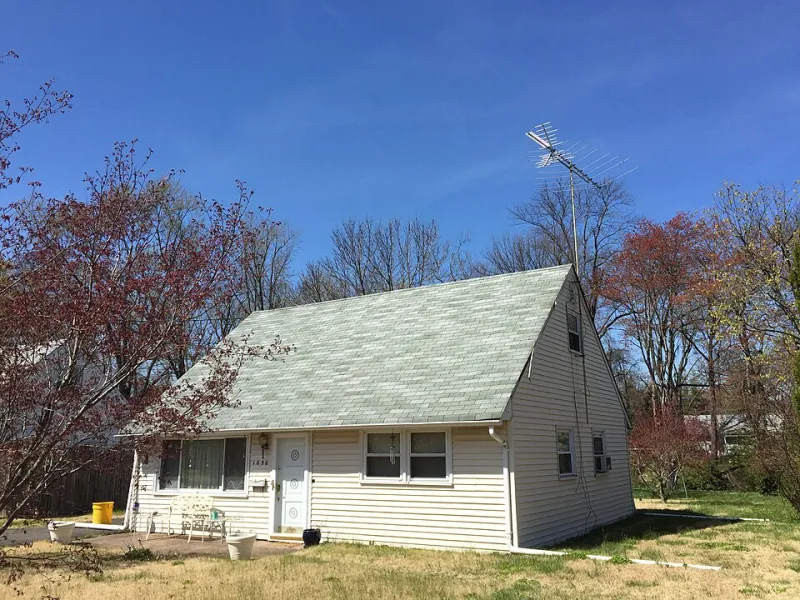
Photo: Famartin, CC BY-SA 4.0, via Wikimedia Commons
There's a town in eastern Kentucky — population somewhere south of 800 — where the closest thing to local news is a Facebook group run by a retired schoolteacher and a bulletin board outside the Dollar General. The nearest network affiliate is a 90-minute drive. Broadband is technically available if you count a single provider offering speeds that max out around 3 Mbps on a good day. For all practical purposes, this town is a media dead zone. And yet, on channel 21, something is broadcasting.
It runs a few hours a night. A hand-lettered title card. A woman reading community announcements off a printed sheet. A 20-minute segment about the county fair that aired three weeks ago. The production value is somewhere between a public access throwback and a high school AV project. But people watch it. People talk about it. And the person running it out of a converted barn on the edge of town has no FCC license, no corporate backing, and a very deliberate policy of not giving his real name to journalists.
Welcome to the world of pirate community television — a subculture so analog it almost feels like a glitch in time, and so stubbornly necessary that it keeps refusing to die.
The Infrastructure Nobody Wanted to Build
The story of American media abandonment isn't new, but it's gotten sharper in the last decade. As streaming ate cable's lunch and local TV stations got absorbed into national conglomerates, the editorial and technical infrastructure that once served smaller communities got gutted. Sinclair and Nexstar didn't buy up local stations to invest in local journalism — they bought them to centralize production and cut costs. What that left behind in rural counties, tribal lands, and certain urban pockets — places where even the stripped-down affiliate model wasn't profitable — was silence.
Into that silence walked people with surplus broadcast equipment, a working knowledge of RF engineering, and a fairly relaxed attitude toward FCC Part 74 regulations.
The technical setup varies wildly from operation to operation. Some use salvaged low-power television transmitters — the kind that once powered legitimate LPTV stations before digital transition killed their usefulness — modified to push a signal across a limited radius. Others are running repurposed satellite uplink gear, or cobbled-together ATSC modulators hooked into amplified antenna arrays. A few operations in the rural Southwest have reportedly experimented with mesh-networked set-top boxes that sidestep over-the-air transmission entirely, functioning more like a closed-loop cable system across a cluster of households.
None of it is particularly expensive. That's kind of the point.
"The gear exists," says one operator — we'll call him Marcus, which is not his name — who runs a small broadcast serving a rural stretch of central Appalachia. "It's sitting in warehouses, in storage units, in the back rooms of decommissioned stations. The barrier was never really the hardware. It was the will to actually do it."
What They're Actually Putting on the Air
Forget your assumptions about what pirate broadcasting looks like. This isn't numbers stations or shortwave weirdness. The content coming out of these operations is almost aggressively mundane, and that's exactly what makes it matter.
High school football highlights. County commission meeting recaps. Obituaries read aloud by someone who knew the deceased. Weather reports that actually reference the specific holler or creek bottom where your farm sits, not the regional forecast zone that lumps you in with three other counties. Agricultural updates timed to planting and harvest seasons. Announcements for church fundraisers, missing livestock, road closures on routes that don't show up on Google Maps.
In short: the stuff local TV was supposed to do before local TV became a cost center.
Some operations run more ambitious programming. Marcus says his channel airs a weekly call-in show where residents can ask questions directly to whoever shows up — a local mechanic one week, a county health worker the next. Another operator, working out of a mid-sized city in the rural South, focuses on a predominantly Black neighborhood that the local Fox affiliate hasn't covered meaningfully in years, running programming in the tradition of the community access channels that thrived before cable consolidation hollowed them out.
"We're not trying to be CNN," that operator told a regional blogger last year, in one of the few documented interviews any of these people have given. "We're trying to be what the corner store used to be. A place where people in this specific zip code can find out what's happening on their actual block."
The Legal Gray Zone (Which Is Really More of a Legal Dark Zone)
Let's be honest about what these operations are doing: broadcasting without authorization on frequencies they don't own, in potential violation of federal law. The FCC takes unlicensed broadcasting seriously, at least in theory — enforcement actions against pirate radio have been a recurring story for decades, and the Preventing Illegal Radio Abuse Through Enforcement (PIRATE) Act of 2020 added real teeth to the penalties.
Television is a different and somewhat murkier situation. The FCC's enforcement resources are finite, and the agency has historically focused pirate broadcast crackdowns on radio operations in major urban markets — particularly in South Florida and New York, where the interference issues are acute. Low-power television piracy in a rural county where the nearest licensed station is 60 miles away occupies a different enforcement priority tier, at least for now.
That doesn't mean operators aren't careful. Most keep their transmitter power deliberately low, operating at wattages that limit their footprint to a few miles. Many run on irregular schedules, making signal monitoring harder. Some have reportedly structured their operations to look, on paper, like equipment testing or experimental setups — categories that exist in FCC rules with some flexibility around them.
None of this is a legal defense. But it is a practical operating strategy.
Something Worth Preserving
The irony baked into all of this is that the FCC does have a licensing pathway specifically designed for what these operators are doing. Low-Power Television licenses exist. Class A TV station designations exist. The problem is that the application process is expensive, slow, and requires navigating a regulatory framework built for entities with legal departments — not a guy with a salvaged transmitter and a barn.
Some media policy advocates have argued for years that the LPTV framework needs a radical overhaul to make community broadcasting genuinely accessible. Those arguments have gone mostly nowhere in Washington, which is perhaps why the people who actually need the service stopped waiting for permission.
What's happening in these dead zones is messy, legally precarious, and built on duct tape and salvaged gear. It's also, in the most literal sense, community media — made by locals, for locals, about the specific texture of life in places the industry decided weren't worth the cable run.
SubStrata has been covering the underground corners where culture refuses to die even after the mainstream stops caring. This one feels different, though. This isn't nostalgia or counterculture posturing. This is infrastructure. This is people deciding that if the system won't serve them, they'll build the system themselves — one unauthorized broadcast at a time.