Grain and Ghost: The Rogue Restorers Pulling Dying Film Prints Back From Oblivion
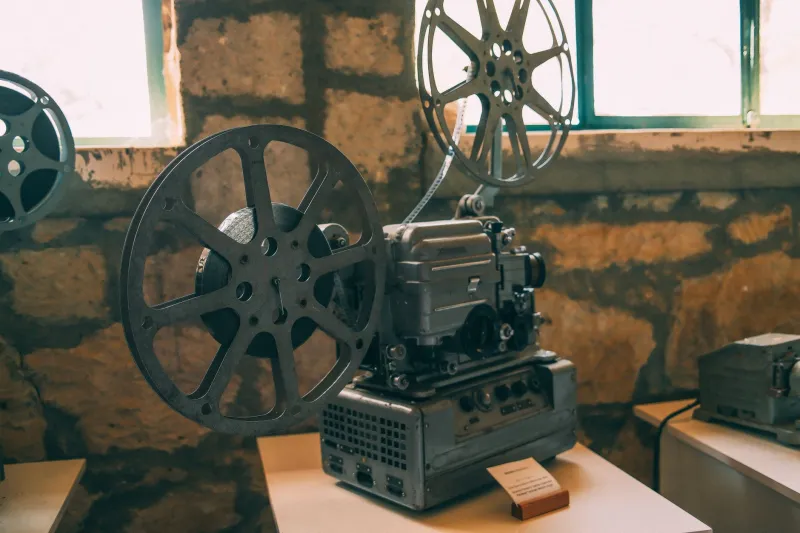
Somewhere in a climate-controlled corner of a garage in the outer suburbs of Pittsburgh, a 35mm print of a 1973 regional horror film is being coaxed back to life. The reels arrived in a garbage bag. The previous owner — a defunct drive-in theater's estate — had no idea what they were worth, which is to say they had no idea they were worth anything at all. The person doing the coaxing goes by a handle online, keeps their real name off the forums, and hasn't slept a full night since the vinegar smell hit them when they first cracked the canister.
This is the world of underground film restoration. It doesn't have a trade association. It doesn't have a union. It barely has a mailing list. What it has is a scattered, loosely connected web of people who decided, somewhere along the way, that letting celluloid dissolve into acetate soup was simply not an option they were willing to accept.
The Prints No One Came Back For
Studio archives are real, and some of them are genuinely impressive. But the films that get the white-glove treatment are the ones that generate licensing revenue, anchor retrospectives, and sit comfortably inside the canon. Everything else — the regional drive-in quickies, the exploitation double-features, the educational documentaries, the foreign co-productions that never found American distribution, the labor union training films, the church-circuit morality dramas — gets a different kind of attention. Which is to say, none at all.
The Library of Congress estimates that roughly 70 percent of all silent films and a significant chunk of early sound-era productions are simply gone. But the losses didn't stop with the early decades. Nitrate gave way to acetate, which solved the combustion problem but introduced a new one: vinegar syndrome. Acetate prints, when stored improperly — and most of them were — begin a slow chemical decomposition that warps, shrinks, and eventually destroys the image entirely. The smell of a dying print is unmistakable. People in this scene describe it the way others describe a house fire. You don't forget it.
The restorers working outside institutional channels tend to find their prints the same few ways: estate sales, theater closures, storage unit auctions, and the occasional tip from someone who knows someone who worked projection at a mall multiplex that's now a Spirit Halloween. The prints that surface through these channels are almost never in great shape. That's the whole point.
The Workflow Nobody Taught Them
There's no formal curriculum for what these people do. Most of them learned by doing, by destroying, and by doing again. The technical knowledge gets passed around on private Discord servers, in the back channels of film collector forums, and occasionally in person at events that don't get advertised anywhere you'd think to look.
The basic triage process — assessing shrinkage, checking for mold, gauging the extent of vinegar syndrome — can be learned from existing archival literature. The Library of Congress and the Academy Film Archive have published technical guides that form a kind of informal bible for the scene. But applying that knowledge with salvaged equipment, in a space that wasn't designed for it, with chemistry sourced from suppliers who mostly serve commercial labs? That's where the real education happens.
Some restorers focus on cleaning and stabilization: removing surface debris, treating mold, slowing the chemical decay enough to buy time for a scan. Others have invested in flatbed scanners capable of capturing 4K or higher resolution from film frames — machines that cost serious money and require serious maintenance. A few have built DIY scanning rigs from scratch, repurposing camera bodies, macro lenses, and stepper motors into devices that would make a film school professor either deeply impressed or deeply uncomfortable, depending on their temperament.
The digital output gets stored redundantly. Multiple drives, multiple locations, sometimes cloud backups in formats chosen for longevity rather than convenience. These people have read enough about bit rot and format obsolescence — there are others in adjacent scenes dealing with exactly that problem — to know that a scan isn't a save. It's just the beginning of a different kind of fight.
Who Decides What Gets Saved
This is where the conversations get complicated, and where the underground nature of the work creates genuine ethical friction.
Copyright, in America, is a long game. A film made in 1971 might still be under protection. The rights might belong to a studio that has no active interest in preserving it but would still, technically, have legal standing to object to someone scanning it and circulating a restoration. Most of the people doing this work are aware of that tension and navigate it with varying degrees of caution. Some restorers will only work on films they've confirmed are in the public domain. Others take a more pragmatic view: if the rights holder isn't preserving the work and isn't licensing it and isn't doing anything with it, the film will be gone in ten years, and that outcome serves no one.
There's also the question of taste and selection. These restorers are making curatorial decisions, whether they frame it that way or not. The films that surface from estate sales tend to reflect the demographics and geography of who owned them — which means the archive being built outside institutional walls has its own blind spots, its own biases. A few people in the scene have started actively trying to correct for that, seeking out films made by and for communities that weren't well-represented in mainstream distribution to begin with: regional Black cinema, early Latinx productions, films from the gay and lesbian underground circuit of the 1970s and 80s. The work of finding those prints is harder, but the argument for doing it is, if anything, stronger.
The Reel and the Record
Ask anyone deep in this world why they do it and the answers tend to orbit the same idea: someone has to. The studios made their calculations. The institutions have their priorities and their budgets and their acquisition committees. And out here at the margins, there are films that document real things — real places, real people, real cultural moments — that are currently in garbage bags in storage units, slowly eating themselves alive.
The Pittsburgh restorer with the horror print eventually got a clean scan off three of the four reels. The fourth was too far gone. They've posted about the project in fragments on a forum most people have never heard of, under a username that won't come up in any search you'd think to run. The film hasn't been publicly circulated yet. There are rights questions to sort out, or at least to think carefully about.
But it exists now in a way it didn't six months ago. That's not nothing. In this particular corner of the underground, it might be everything.